
Live Casino Lightning Roulette in the UK: How It Works
 Available in GB
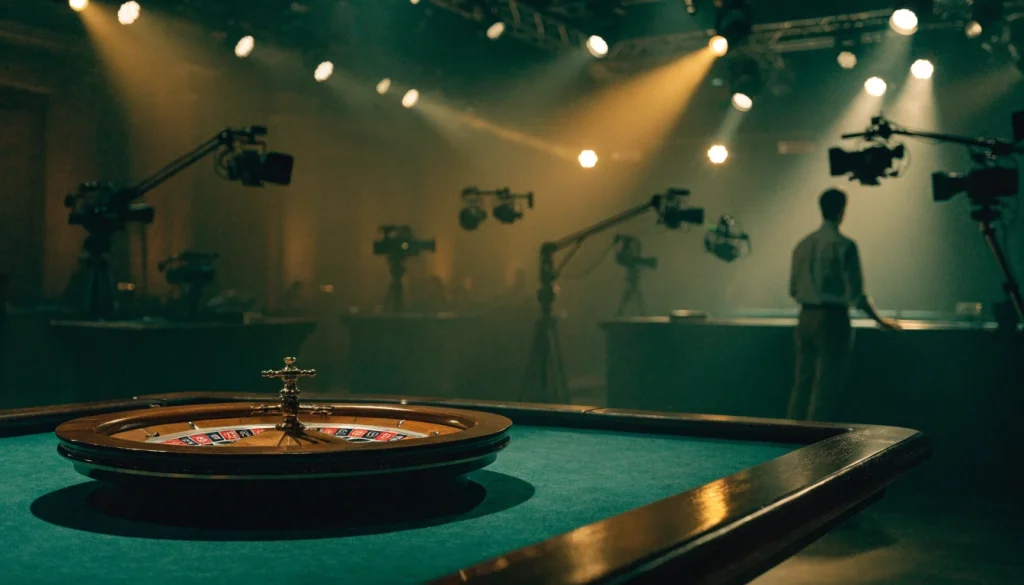
A live dealer conducts the game in a studio, while the online interface handles bets and displays the roulette table.
Table of Contents
- The Online Table: A Screen, a Stream and a Licence
- Lightning Roulette in the Live Casino
- What Makes a Live Roulette Site Suitable
- The First-Person View and the Dealer’s Table
- Online Casinos, Welcome Offers and the Small Print
- Roulette Bets, Zero and the House Edge
- A Demo Table Without the Fiction of Winnings
- The Live Dealer and the Pace of the Game
- Playing Roulette Online: One Number, Unequal Wheels
- The Online Roulette Game and Its Winning Number
The Online Table: A Screen, a Stream and a Licence
An online live roulette table is not simply a roulette animation made more convincing. Its picture comes from a studio, where a human dealer conducts the game in real time. Alongside the video sits the betting interface: the part of the screen through which players make their selections. One side shows events unfolding at a physical table; the other provides the means to take part remotely. The arrangement is both a broadcast and a game.
That distinction matters when a search for a Lightning Roulette online casino leads to a page promising a live table. The words “live” and “online” describe different parts of the arrangement. Online means that the game is accessed through a digital service; live dealer means that the action shown is being conducted by a person in a studio, rather than generated as a computerised animation. The image and the interface meet on one screen, but they are not the same thing.
The screen gives the game a peculiar domestic presence. A studio production arrives in a private room, while the means of placing bets remain within the service’s interface. The dealer is present as a figure in the broadcast, not as someone physically sharing a room with the players. What looks like a table is therefore also a piece of infrastructure: cameras carry the event, software carries the choices, and an operator brings the two together.
It is a carefully divided scene. The human activity belongs to the studio; participation belongs to the interface. That division can make an online casino with Lightning Roulette seem, at first glance, like a direct window onto a room elsewhere. More precisely, it is a real-time stream paired with an on-screen system for placing bets. The screen is not a magic opening in the wall. It is a service with moving parts.
In Britain, the service has a legal condition. A live dealer casino may operate legally in the UK only if it holds a licence from the UK Gambling Commission. The rule concerns the operator providing gambling to customers, not the visual style of the game. A convincing studio, a polished stream or the appearance of a familiar casino table cannot substitute for the relevant licence.
American Roulette at UK Online Casinos: 0 and 00
That requirement reflects a broader British approach to remote gambling: the activity is not outside regulation merely because it takes place through a screen. The Gambling Act 2005 governs gambling in England, Wales and Scotland, and remote operators serving the British market must hold the appropriate Gambling Commission licence regardless of where they are based. The location of a studio, by itself, does not settle whether the service is authorised to serve customers in Britain.
The distinction is easy to miss because the broadcast is designed to make the table the most visible part of the experience. The licence is less theatrical. It does not appear as a dealer’s gesture or a wheel turning; it is a condition attached to the operator behind the service. Yet for a UK online casino offering live dealer games, that condition is central. The stream shows what happens at the table. Regulation establishes whether the operator may offer the game to British customers.
This is why “live” should not be taken as a synonym for “lawful”, or as a quality label that settles every question about a service. It describes the format: real-time studio gameplay with a human dealer, alongside an interface through which bets are placed. Legal status depends on the operator’s UK Gambling Commission licence. The two ideas belong together in any account of online live play, but they answer different questions.
The screen makes distant activity feel immediate; the licence makes the operator accountable within a national system. One is visible, the other institutional. Their coexistence is the basic setting for live dealer roulette in Britain, whether the game is described as an online casino with Lightning Roulette or simply as a live table. The name of the game may draw attention, but the format and the operator’s legal standing determine what kind of service is being encountered.
A studio is not a licence. That distinction is less glamorous than the broadcast, and more important. This article is for entertainment purposes only, not gambling advice.
Lightning Roulette in the Live Casino
When choosing a UK live casino for Lightning Roulette, it helps to check practical details as well as the game itself. This list provides a brief reference point on the payout information available for each operator.
1. Chanze
Payout speed: 1-3 business days Chanze lists a payout speed of 1–3 business days. This is the available practical detail for considering it.
2. x3bet
Payout speed: 1-3 business days x3bet lists a payout speed of 1–3 business days. This is the available practical detail for considering it.
3. Jetsetspins
Payout speed: 1-3 business days Jetsetspins lists a payout speed of 1–3 business days. This is the available practical detail for considering it.
4. EvoSpin
Payout speed: 1-3 business days EvoSpin lists a payout speed of 1–3 business days. This is the available practical detail for considering it.
5. SlotoSport
Payout speed: 1-3 business days SlotoSport lists a payout speed of 1–3 business days. This is the available practical detail for considering it.
6. SpinFormula
Payout speed: 1-3 business days SpinFormula lists a payout speed of 1–3 business days. This is the available practical detail for considering it.
7. BeOnBet
Payout speed: 1-3 business days BeOnBet lists a payout speed of 1–3 business days. This is the available practical detail for considering it.
8. NightWin
Payout speed: 1-3 business days NightWin lists a payout speed of 1–3 business days. This is the available practical detail for considering it.
9. NightLuck
Payout speed: 1-3 business days NightLuck lists a payout speed of 1–3 business days. This is the available practical detail for considering it.
10. Amunbet
Payout speed: 1-3 business days Amunbet lists a payout speed of 1–3 business days. This is the available practical detail for considering it.
Lightning Roulette belongs to a familiar modern category: a named roulette game encountered through a live-casino format. The name may suggest a different sort of spectacle, but the central distinction is less theatrical. In live roulette, a human dealer spins a physical wheel. In computerized roulette, the result is produced by a Random Number Generator, or RNG. The screen may make the two formats look similarly immediate; their underlying arrangements are not the same.
That difference matters because “roulette” describes both a set of rules and a way of producing a result. The wheel is not merely scenery in a live game. It is the physical object around which the dealer works, and the spin takes place there. In an RNG version, the familiar wheel and ball may be represented visually, but the outcome comes from software rather than from a dealer setting a physical wheel in motion. The image can be convincing. The mechanism is different.
Live Roulette
A human dealer spins a physical wheel in a studio, and the action is broadcast in real time.
Computerised Roulette
The result is produced by a Random Number Generator (RNG) using software animations.
A live-casino version of Lightning Roulette therefore sits at the meeting point of a traditional table game and a named digital product. The title identifies the game being offered; the live format identifies how the roulette action is conducted. Keeping those descriptions separate helps avoid an easy confusion: a game shown on a screen is not necessarily a live game. Some screens display a studio and dealer; others display a computer-generated table. The screen is a window, not proof of what lies behind it.
Roulette has long been suited to this sort of translation. Its central action is compact and visible: a wheel turns, a ball moves, and the table waits for the result. That sequence can be staged in a room, represented by graphics, or carried into a live-casino setting. The digital age did not need to invent a new visual language for roulette. It inherited one already made for spectators as well as players.
The live table retains something of the public character of the old casino. The dealer’s work is visible, and the wheel is present as an object rather than as an illustration. This does not make the game a social gathering in the ordinary sense, nor does it turn a studio into a public gaming room. It does, however, preserve a visible human action at the centre of the game. The computerised alternative removes that particular human and physical element, replacing it with a randomised software result.
The distinction can sound like a matter of atmosphere, and atmosphere is part of it. A physical wheel has motion, sound and a dealer’s presence; a digital roulette display can reproduce the appearance of a table without reproducing its physical process. Yet the difference is also factual. One format uses a real wheel spun by a dealer; the other relies on an RNG. Neither description should be inferred from a game’s name alone.
That caution is useful with a title such as Lightning Roulette. The title may be prominent in a casino’s game catalogue, but the word “live” describes the format, not every feature or rule of the named game. A live-dealer label points to a human dealer and physical wheel; it does not by itself explain every special element associated with a particular roulette variant. The name and the format answer different questions.
While a live-dealer label confirms the presence of a human dealer and physical wheel, it does not explain the specific special rules or features of a particular roulette variant.
There is a small cultural irony in this arrangement. Casinos have always made chance legible: the wheel turns in public view, while the rules give that motion an orderly frame. Digital roulette keeps the legibility and can keep the visual language, even when the physical wheel has disappeared. Live roulette, by contrast, brings the object back into view. The old theatre remains. The machinery differs.
For anyone comparing Lightning Roulette in a live casino with a computerised roulette game, the useful first question is not whether one looks more exciting on a screen. It is how the result is produced. A dealer spinning a physical wheel marks the live format; an RNG marks the computerised one. The distinction is plain, even when both arrive through the same device.
What Makes a Live Roulette Site Suitable
Choosing a live roulette site is less a matter of finding a grand claim than of checking whether the table fits the way the game is played. A site may offer the right title, yet still be a poor match if its table limits, pace or technical demands make a session awkward. The useful comparison is practical, not ornamental.
Casino Games: Slots, Live Tables and More
Start with the table’s minimum stake. Live tables can set higher minimums than digital roulette, so a figure that looks modest in a menu may still be too high for a cautious session. One specialist review reports 20p as an indicative starting stake for many live roulette and baccarat tables; it also notes that blackjack tables often begin at higher limits. That is a reported snapshot, not a promise about every table or a fixed rule of the market. Limits can differ between tables, and the displayed table rules should be read before play begins.
The pace matters just as much. A live dealer runs a real table rather than a sequence of instant, computer-generated outcomes. Betting windows open and close around the action, and the spin takes place in a shared rhythm. That can suit players who prefer to watch the table develop, but it leaves less room for rapid-fire play. A site that shows the betting window clearly and makes the current stage of the round easy to follow is more useful than one whose interface obscures the action.
Online Bingo in the UK: Rooms, Slots and Play
Connection quality is another practical test. A stable internet connection is necessary for live games; interruptions can make it difficult to keep track of a round or place a bet before betting closes. The stream and betting controls should remain responsive together. A sharp picture is of little use if the interface lags behind it. Nor does a visually polished lobby compensate for a connection that repeatedly drops.
The layout should make essential information legible: the available betting areas, the stake being placed and the status of the round. Clear table rules and the paytable are not decorative extras. They explain how the game treats each selection and what a stated return means. Reviewing them before play is part of judging the table, not a task to postpone until something unexpected happens.
A suitable choice also depends on the intended session, rather than on a label such as “best”. The best Lightning Roulette casino for one person may have a minimum stake or table tempo that does not suit another. The useful questions are whether the entry point fits a pre-set budget, whether the interface can be followed comfortably, and whether the stream works reliably on the device and connection being used. A budget set in advance is a boundary, not an invitation to extend play after a loss or a win.
Choosing a Live Table
- Check if the minimum stake fits the budget
- Verify the stability of the internet connection
- Review the table rules and paytable
- Ensure the betting window and interface are legible
The UK context adds a basic condition: real-money casino play belongs at a properly licensed operator. Beyond that, suitability is not established by a crowded lobby or confident advertising. It comes from a table whose limits are visible, whose rules are understandable and whose operation is steady enough for the game to be followed.
No table turns chance into certainty. The page is for entertainment purposes only, not gambling advice; a live table should be assessed as a form of paid entertainment, with its costs and pace clear before play begins. A calmer decision than the game itself.
The First-Person View and the Dealer’s Table
“First person” can sound like a promise of control: a camera at the player’s shoulder, a hand reaching towards the wheel, perhaps even a choice of where to look. In a live dealer roulette game, it is better understood as a description of the viewing experience. The player watches a real table through a studio stream and makes decisions through the separate betting interface. The viewpoint is close to the action, but it does not belong to the player.
That distinction matters because the studio and the screen perform different jobs. A human dealer conducts the game at the physical table; the stream carries that activity to the player. The on-screen interface is where bets are entered. Neither part gives the player command of the wheel, the dealer or the camera. “First-person Lightning Roulette” therefore refers to watching the live game from the player’s screen, not stepping into the studio or directing its production.
Online Casino Without ID in the UK: What to Expect
The language of immersion often blurs this boundary. A camera facing the wheel can make the table feel near enough to touch, while the interface places betting decisions in the same visual field. But proximity is not participation in the physical sense. The player is present as a viewer and a bettor, not as a person standing beside the dealer. The screen joins those roles without making them identical.
There is something revealing in that arrangement. Casino play has long relied on a visible ritual: a person handles the equipment, and other people watch for the result. The online version preserves that human centre while relocating the audience. The dealer remains at the table; the players gather, separately, around the stream. The machinery is modern. The theatre is old.
For someone considering whether to play first-person Lightning Roulette, the practical meaning is modest and clear. The game is seen as it is dealt in the studio, while the betting controls remain on screen. The experience is not a simulation of holding the ball or turning the wheel. Nor does the phrase imply a special camera mode or a personalised view. It describes the player’s side of a live broadcast.
This is also why the phrase “first-person casino game” should not be mistaken for a different set of rules or a separate kind of roulette. It concerns how the game is presented, not who operates the table. The dealer’s actions belong to the studio; the player’s choices belong to the interface. A live stream can make the distance feel smaller, but it cannot remove it.
How First-Person View Works
The player watches a real studio stream through a screen and makes betting decisions via a separate digital interface. This arrangement provides a close viewpoint of the action, but the player remains a remote viewer and bettor rather than a physical participant in the studio.
That distance is not a flaw to be concealed. It is the defining arrangement of online live play: an actual dealer and table on one side, a remote audience and betting controls on the other. The screen offers a view, not a seat. The distinction is plain enough, though the language of immersion likes to dress it up.
Online Casinos, Welcome Offers and the Small Print
A welcome offer can look generous while being irrelevant to a live roulette session. A specialist review of UK casino promotions describes many welcome deals as free spins tied to slot games; those spins cannot be transferred to a live table. The distinction is easy to miss when an offer is presented as a single headline, but the game named in its terms determines where the bonus can be used.
That matters when comparing casinos for Lightning Roulette. A promotion may be attached to the account rather than to a particular game, yet still exclude live tables or restrict which games qualify. A balance shown beside the game does not, by itself, establish that the balance can be staked there. The rules are in the small print, where the attractive headline has less authority.
The weighting behind the headline
Even when live games are eligible, their contribution towards wagering requirements may be modest. A live table can count for only a small share of the required play; one stated example is a 10% weighting. In practical terms, that means a qualifying stake may advance the requirement by only a fraction of its value. The offer’s full terms should specify how each game category is treated.
High-RTP Slots in the UK: How RTP Really Works
The wording matters. “Eligible” does not mean “counts in full”, and the same promotion can treat slots and live casino games differently. Any maximum bet limit during wagering also belongs in the calculation: a bonus can become void if play breaches its conditions. Checking the wagering requirement, game weighting and maximum bet limit before opting in is more useful than judging the offer by its opening figure.
There is a small institutional comedy in the arrangement. The live table lends a promotion the atmosphere of a casino, while the offer may be built around a different kind of game altogether. The welcome is not necessarily addressed to the table.
Comparing the offer with the game
For someone looking for a suitable UK casino for Lightning Roulette, a bonus should be considered separately from the game itself. The relevant questions are plain: can the offer be used at live tables, does Lightning Roulette qualify, and what share of play counts towards any wagering condition? If those details are unclear, the headline cannot fill the gap.
Terms can vary between offers and can change, so a general description is no substitute for the conditions attached to the specific promotion. Free spins are not cash, and a promotion does not make a live table more favourable. It changes the accounting around play, not the nature of the game.
A careful comparison therefore keeps two things apart: access to the live table and the restrictions attached to promotional funds. The first is a question about the casino’s games; the second is a contract written in promotional language. Neither should be inferred from the other.
This is entertainment, not gambling advice. A bonus is optional, and declining one avoids its wagering conditions altogether. When an offer is accepted, its full terms—not its banner—set the boundaries.
Welcome Offers
Many welcome deals, such as free spins, may be tied to slots and excluded from live dealer tables. Always check the small print for game weighting and wagering requirements.
Roulette Bets, Zero and the House Edge
A roulette wager is a small agreement with the table: a number is chosen, the ball settles, and a win follows only when it comes to rest on the selected number. The apparent simplicity hides different prices for different ways of making that choice. A bet on one number is called a straight-up bet; other wagers cover broader outcomes. Their returns differ, but so does the house’s mathematical advantage.
The house edge is the share of stakes the rules are designed to retain over time, not a forecast of what any particular spin will do. For a straight-up bet, that edge is 2.9%; for other roulette bets, it is 2.7%. The gap is modest, but it is part of the price of choosing a narrow target. A single-number wager asks for precision, and the rules attach a slightly larger long-run cost to it.
That distinction matters when considering a Lightning Roulette casino game as well as roulette more broadly: the name of a game does not make the underlying wager disappear. The relevant question at the table is still what has been selected and how the rules treat it. In a version with additional features, those features should not be confused with a change to the basic condition for a winning number. The table rules and paytable define the terms.
Zero is where roulette’s history of house advantage becomes especially visible. In French Roulette, an even-money wager—one that pays on either of two broad outcomes—does not lose its entire stake if the ball stops at zero. Instead, half of that stake is forfeited. The exception softens the effect of zero for that type of bet; it does not turn zero into a winning result for the player.
Online Casino Tournaments UK: Free Entry Explained
The rule is a reminder that the edge is built from details that can look almost ceremonial. A green pocket interrupts the neat division between two sides, and the French rule cushions that interruption for even-money bets. Other wagers have their own terms, so a familiar label alone is not enough to tell the whole story.
For anyone choosing to play a Lightning Roulette casino game in the UK, the practical arithmetic is less glamorous than the name. A straight-up selection carries the higher stated house edge; other bets carry the lower one. Neither figure predicts the next result, and neither makes a losing run recoverable by staking more. Roulette remains a game of outcomes governed by its rules, not a puzzle that yields to persistence.
Small differences. Real costs.
A Demo Table Without the Fiction of Winnings
A demo table can make a roulette interface legible without putting money at stake. It offers a way to see how selections are made and how the screen changes during a round; it does not turn practice into a source of cash. Any balance shown in a free-play mode is part of the display, not a sum that can be withdrawn.
That distinction matters particularly with a live-dealer title. A search for a practice version of Lightning Roulette does not establish that one is offered, or that a particular UK casino provides it. Availability and terms depend on the individual game and operator. The cautious approach is to treat demo access as a possibility to verify, not a feature guaranteed by the name of the game.
Demo Mode
Demo tables allow players to familiarise themselves with the interface and betting controls without risking money, but fictional winnings in free-play mode cannot be withdrawn.
Where a demo is available, its value is modest and practical: it can reveal the shape of the interface before money is involved. The screen may present betting choices, a balance and the progress of a round. Familiarity with those controls is not the same as learning to predict a result. A practice session offers no evidence about what a later round will do.
Nor should a free-play screen be mistaken for a rehearsal with identical conditions to a live-money table. The interface may look similar, but the balance has no purchasing power and cannot become a payout. That is the point, not a defect. A simulation can show where the controls are; it cannot make fictional winnings real.
The word “demo” can also conceal differences between products. A roulette game may have a practice mode while a particular live-dealer version does not, and access may vary between sites. The game’s information and the operator’s own display are the useful places to establish what is actually available. No assumption about Lightning Roulette demo access follows simply from being able to play another roulette title for free.
For anyone moving from practice to real-money play, the boundary is financial as well as visual. A free balance cannot indicate what a session will cost, and a simulated run should not be treated as a forecast. Any real-money session calls for a budget set in advance and kept within its limit. The page is for entertainment purposes only, not gambling advice.
Practice, not promise.
The Live Dealer and the Pace of the Game
A Lightning Roulette live dealer casino in the UK is built around a human-run table, not merely an animated wheel. A camera carries the studio action in real time; the dealer works at the physical table while the betting interface sits alongside the stream. The software connects those two parts, but it does not make the studio’s activity instantaneous. There is a person at the centre of the operation, and the pace reflects that.
This changes the rhythm. Digital roulette can move directly from one round to another; a live table has to make room for the dealer and the stream. The game therefore runs more slowly than its digital counterpart. That interval is not a technical flaw in itself. It is the cost of presenting a human-operated table as it happens, rather than compressing the action into a sequence generated on screen.
The distinction is modest but important. A live dealer table is not a private camera feed that can be hurried along. Its timing belongs to the table, and the interface must remain in step with the broadcast. If the connection is unstable, the stream may falter or fall behind the action, making it harder to follow what is happening. A reliable internet connection is part of the basic arrangement, not an optional refinement.
The live format also comes with higher minimum bets than digital games. That affects the table’s character as much as its mechanics: slower rounds and a higher entry point make it a different proposition from a quick digital game. The dealer gives the experience a recognisable human centre, but does not remove the financial terms attached to play.
Budget Limits
A live table’s atmosphere is not a reason to extend play; always set a budget in advance and keep it within its limit.
There is a small social history in this design. The casino table was once a room, with a dealer’s gestures and other players’ presence making the pace visible. The live stream carries that arrangement into a screen, while the interface turns participation into buttons and figures. Old ritual, new plumbing.
A budget should be set before play, and kept within its limit; a live table’s atmosphere is not a reason to extend it. This is entertainment content, not gambling advice.
Playing Roulette Online: One Number, Unequal Wheels
A roulette screen can make different wheels look much the same: a ring of numbered pockets, a betting area and a result. The distinction that matters first is not visual polish but the number of green pockets. European Roulette has a single green pocket, marked 0. American Roulette has two, 0 and 00.
That extra pocket changes the chance of a selected number winning. In European Roulette, the odds are 1 in 37; in American Roulette, they are 1 in 38. The difference is small enough to disappear beneath the animation, but it is built into every spin. The wheel has the final word.
This is useful context when looking to play Lightning Roulette online in the UK. The name identifies a particular roulette game, but it does not make the underlying distinction between European and American wheels irrelevant. The table’s stated rules matter: the green pockets shown on the layout reveal which version is being played. A 00 is not decoration, nor a second label for zero. It is another pocket on the American wheel.
The contrast has a history as well as a practical consequence. European and American roulette developed as recognisable table formats, and their layouts carry their rules in plain sight. On screen, those conventions are compressed into a small interface. The player may be watching a wheel turn, but the number of pockets is still a matter of arithmetic, not atmosphere.
A European wheel gives each number a 1-in-37 chance; an American wheel gives each number a 1-in-38 chance. This applies to the stated odds of winning on a selected number, not to a promise that either wheel will favour a particular choice. Past results do not alter the next spin.
Before play, the rules and paytable should be reviewed, including whether the table shows 0 alone or both 0 and 00. For a game presented as Lightning Roulette, that check helps separate the game’s name from the basic wheel format beneath it. Small marks, lasting consequences.
The Online Roulette Game and Its Winning Number
At the centre of an online roulette game is a simple condition: the ball comes to rest in a numbered pocket, and a bet wins when it names that number. The screen may add motion, colour and a dealer’s voice, but the result is still expressed as a number against which the selected bet is judged.
That plain rule gives roulette its unusual balance of clarity and suspense. The outcome is easy to understand; the interval before it arrives is where expectation gathers. A player can follow the ball across the wheel and watch it slow, while the betting interface records the selection already made. Once the ball settles, the number decides the result. There is no need to read a story into the spin.
In a live version of the online Lightning Roulette casino game, that winning-number principle remains the useful starting point. The name may draw attention to the game, but the basic question at the table is still whether the ball lands on a number included in the bet. The interface presents choices; the wheel produces the outcome. Keeping those roles distinct makes the game easier to follow.
Roulette’s long life owes something to this compact arrangement: many possible choices, one final landing place. Its ceremony can make chance look theatrical, but the winning condition is direct. The ball lands on a number. A matching selection wins.
Live casino play is entertainment, not gambling advice. A budget set before play helps keep the money involved within a deliberate limit.
Casino Games

American Roulette at UK Online Casinos: 0 and 00
American roulette adds a double-zero pocket to the familiar wheel, affecting its layout, betting options...

Aviator Casino Game in the UK: Rules and Play
A clear look at UKGC licensing, offshore casinos, demo claims, bonuses and payment routes around...
Three-Reel Slots in UK Online Casinos
Explore the classic reel format, real-money and free-play settings, variance, and the UK rules governing...

5-Reel Slots in the UK: Demos, Stakes and Play
Five reels define the format, while demo play, bonus features and the casino setting shape...

Bonus buy slots in the UK: trying demo play
Practice modes can show how a bonus-buy feature works, but availability varies by game and...

UK Online Casino Fast Payouts: Keno Returns Explained
A keno paytable shows possible game winnings, while an account withdrawal follows a separate operator...

UK First-Deposit Casino Bonuses: How Offers Work
A first-deposit label describes when an offer applies, while eligibility, rewards and withdrawal rules depend...

High-Volatility Slots in the UK: How They Work
Volatility describes the general frequency and scale of slot wins, not a guarantee or timetable...

Keno at UK Online Casinos: Odds and How to Play
Keno outcomes depend on the numbers selected before a random draw, while paytables determine how...
Live Casino UK: How Online Tables Work
A live casino pairs a physical table broadcast with on-screen controls, while the lobby brings...

Low-Volatility Slots in the UK: How They Work
These games tend to distribute returns as more frequent, smaller wins, but volatility cannot predict...

Online Slot Payout Percentage: What RTP Means
A payout percentage describes a theoretical return across repeated play, not the result of any...

Best RTP Casino Slots in the UK: How Returns Work
An advertised return is a long-run calculation, not a prediction of session results; volatility helps...

Video Slots UK: Reels, Bonuses and How Play Works
A clear guide to reel patterns, bonus features, casino play and the differences between free...

Casino Dice Games in the UK: Odds, Sites and Stakes
A clear look at how casino dice wagers work, what chance can reveal, and where...

Chicken Road Game Casino UK: What the Label Means
The Chicken Road label alone does not confirm a game’s format, availability, rewards or casino...

Crash Casino Games in the UK: How They Work
Crash games turn an uncertain wager into a rising visual, while licensing, payments and promotional...

Crazy Time Live Casino Game in the UK
A guide to the studio stream and betting interface, with context on UK casino choices,...

Deal or No Deal Casino UK: How the Game Works
The format turns hidden briefcase values and a cash offer into a decision about whether...

European Roulette Online Casinos in the UK
A practical guide to the single-zero wheel, betting choices, payouts and how European roulette differs...

Fastest Payout Online Casino UK: What Claims Mean
A fair comparison depends on verified casino-specific times, consistent conditions and a clear definition of...

French Roulette Online Casinos in the UK
French roulette pairs the familiar European wheel with rules that soften zero’s impact on even-money...

Hi-Lo Casino UK: How the Card Game Works
Hi-Lo rules vary by format, including how ties, matching values and successful predictions are treated....

High-RTP Slots in the UK: How RTP Really Works
RTP is a long-run feature of a slot’s mathematical design, not a prediction of what...

JetX Casino Game in the UK: What the Label Means
A careful look at JetX’s classification, demo claims, UK casino access and the limits of...

Live Baccarat Online Casinos in the UK: How It Works
A look at baccarat scoring, live-dealer play, UK licensing, stakes and the terms that can...

Live Blackjack Online Casinos in the UK: How It Works
A clear guide to the dealer, betting interface, table limits and rules behind live blackjack...

Live Dream Catcher Casino UK: How the Game Works
A guide to the live dealer format, physical wheel, site considerations, and what demo play...

Live Roulette UK: English-Speaking Dealers
A look at the dealer, streamed wheel, betting interface and the limits of what live...

Mines Casino Game in the UK: What Can Be Known
An overview of Mines in the wider casino landscape, including demo play, prediction limits and...

Monopoly Live Casino UK: How Live Play Works
A practical look at the studio, on-screen controls and the limits of treating a live...
Online Bingo in the UK: Rooms, Slots and Play
Bingo rooms run on tickets, shared draws and completed patterns, while slots remain separate games...

Online Casino Games for Real Cash in the UK
A practical look at spin costs, withdrawable wins, bonus conditions and the limits of judging...

Online Casino Tournaments UK: Free Entry Explained
Tournament terms shape whether entry is free, which spins count, and how scores relate to...

Online Casino Without ID in the UK: What to Expect
A sign-up without document uploads does not mean anonymous play; UKGC-licensed casinos must verify players,...

Plinko Casinos in the UK: Licensing, Play and Payments
Plinko’s legal context, demo limits, casino terms and payment options depend in part on whether...





























































































































































































































































