
Casinos That Accept E-Checks in the UK: How to Check
 Available in GB
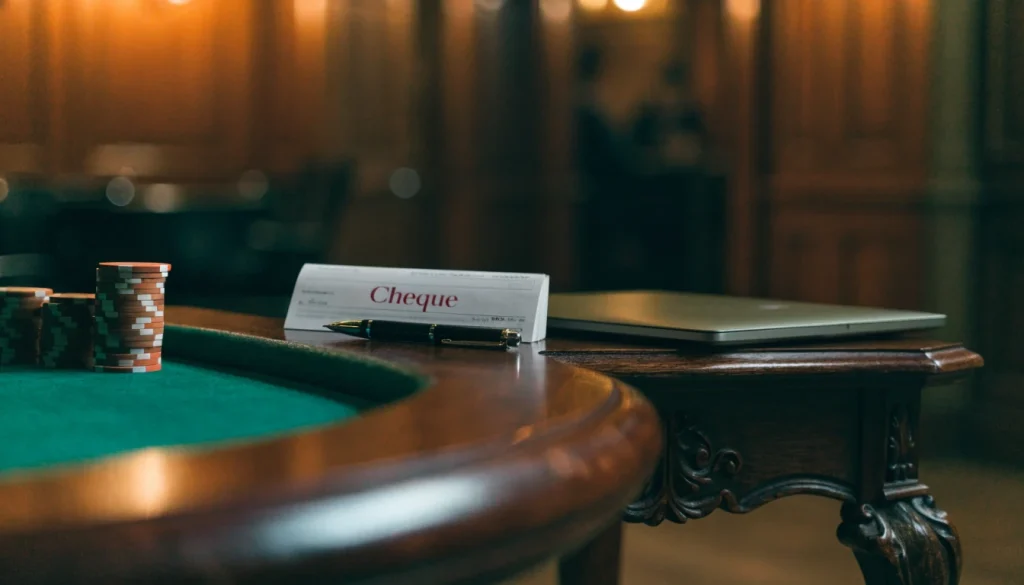
E-check availability depends on the UK account’s live cashier, while payment labels, limits, fees and withdrawal rules affect the practical choice.
Table of Contents
- E-check availability in the UK cashier
- What an e-check acceptance claim needs to establish
- Deposits: the UK methods actually described
- Instant deposits are not instant payouts
- The e-check label and the payment route
- Comparing payment costs without a universal winner
- Payment methods on mobile: check the account currency
- Deposit limits shape the usable payment option
- Where payment costs can accumulate
- Withdrawals, verification and the original source
E-check availability in the UK cashier
A casino’s UK-facing pages do not, by themselves, establish that its cashier supports e-checks. A payment method can appear in an old review, a general list of options or information intended for another market without being available to a customer in the United Kingdom. The useful check is the live cashier for the relevant account and location.
That makes “e-check” a claim to verify, not a label to infer. A search result or payment-method page may help identify what to look for, but it cannot confirm that the option is currently offered to UK customers. Nor does an operator’s general statement that it accepts bank payments necessarily mean the cashier has a separately named e-check option. The wording matters: the cashier should identify the method clearly enough to distinguish it from other payment choices.
A practical check starts with the casino’s own payment area. After signing in, open the deposit cashier and inspect the methods displayed for the UK account. Look specifically for “e-check” or “eCheck”; do not treat a bank logo, a bank-transfer option or a reference to electronic payments as equivalent without confirmation. If the method is not listed, the public-facing site’s broader payment language is not enough to establish availability.
When looking for a UK casino that accepts echeck, payment availability and withdrawal timing are both worth checking. Use this list as a starting point, and confirm echeck support directly with each operator before depositing.
1. Chanze
Payout speed: 1-3 business days Chanze has a listed payout speed of 1–3 business days.
2. x3bet
Payout speed: 1-3 business days x3bet has a listed payout speed of 1–3 business days.
3. Jetsetspins
Payout speed: 1-3 business days Jetsetspins has a listed payout speed of 1–3 business days.
4. EvoSpin
Payout speed: 1-3 business days EvoSpin has a listed payout speed of 1–3 business days.
5. SlotoSport
Payout speed: 1-3 business days SlotoSport has a listed payout speed of 1–3 business days.
6. SpinFormula
Payout speed: 1-3 business days SpinFormula has a listed payout speed of 1–3 business days.
7. BeOnBet
Payout speed: 1-3 business days BeOnBet has a listed payout speed of 1–3 business days.
8. NightWin
Payout speed: 1-3 business days NightWin has a listed payout speed of 1–3 business days.
9. NightLuck
Payout speed: 1-3 business days NightLuck has a listed payout speed of 1–3 business days.
10. Amunbet
Payout speed: 1-3 business days Amunbet has a listed payout speed of 1–3 business days.
The order matters. A payment method shown in an article or on a promotional page may describe the operator’s wider service rather than the UK cashier. A specialist review, for instance, lists Visa and Mastercard, but those names do not confirm that either card product is currently eligible for a UK customer. The cashier is where current availability and card-product eligibility need to be checked. A logo is a signpost, not a working payment option.
It is also worth distinguishing the cashier’s actual choices from its surrounding copy. A page may group several methods under a broad heading, while the deposit screen presents only some of them. Conversely, a method may be named in the cashier but carry conditions that become visible only when selected. The relevant evidence is the option presented for the account, together with any terms displayed before a transaction is submitted—not a general claim that the casino accepts payments online.
For the same reason, a method’s appearance should be checked in the correct market context. A page aimed at UK customers can still describe services that are not available to every UK account. The site’s language, currency symbols or a UK flag do not settle the question. Those details identify an intended audience; they do not demonstrate that a particular payment route is enabled in the live cashier.
Casinos That Accept Tether in the UK
Card names require particular care in Britain. Visa and Mastercard describe networks, not the precise card product or the rules governing its use. UK-licensed casinos cannot accept credit-card payments for gambling, so a card logo cannot be read as permission to use every card bearing that mark. The cashier’s eligibility information must be read alongside the product actually being used. A familiar name is not a complete specification.
There is a simple way to avoid turning an uncertain listing into a deposit. Check the payment screen before entering transaction details, confirm that the method is explicitly offered for the account, and read the conditions attached to it. If the page gives a broad description but the cashier does not show the method, the safer conclusion is that current availability has not been established. That is not proof that the option can never be offered; it is a reason not to treat an old or general listing as confirmation.
The same caution applies to lists of “e-check casinos”. A list may collect sites associated with the term while saying little about whether their UK cashiers currently display it. A ranking cannot repair that gap. “Best” or “top” is not a payment status, and a casino should not be presented as accepting e-checks merely because the phrase appears beside its name elsewhere.
For a UK customer, the strongest confirmation is therefore narrow and concrete: the live cashier identifies e-check as an available method for that account, and the displayed conditions allow the intended transaction to proceed. If the option is absent or ambiguous, the site’s UK-facing appearance does not fill in the missing detail. Cashier first. The rest is advertising.
Do
- Check the live cashier after signing in
- Look specifically for “e-check” or “eCheck”
- Verify conditions before submitting a transaction
Don’t
- Rely on old reviews or general payment lists
- Treat bank logos as e-check confirmation
- Assume a UK flag settles availability
What an e-check acceptance claim needs to establish
A casino’s statement that it accepts e-checks describes a payment option, not a promise that every attempted payment will go through. The distinction matters. A method can appear in a general list of accepted options while a particular transaction still depends on whether its account details and payment route belong to the same customer.
That is the practical test behind an acceptance claim. The name on the casino account and the ownership details attached to the payment should point to one person. When they do, basic questions about who is moving the money are less likely to create avoidable friction. When they do not, the word “accepted” on a page cannot settle the matter.
This is not an obscure technicality. Payment systems are built to identify who is paying, and a casino account is also a record of who is playing. The two records are expected to make sense together. A claim that a site accepts e-checks therefore says less than it may first appear to say: it identifies a possible route, but does not by itself establish that a payment made through somebody else’s account will be treated as the customer’s own.
The same point applies to searches for UK casinos that accept e-checks. The phrase can sound like a straightforward list category, as though acceptance were a permanent badge attached to a casino. In practice, the meaningful question is narrower: does the stated method fit the account holder and the transaction being attempted? A label can describe a route without resolving the ownership details of an individual payment.
Casinos That Accept Ethereum in the UK: What to Check
There are two different claims here. One is that a casino recognises a particular payment route. The other is that a particular customer can use it successfully. The first is about the casino’s stated options; the second is about the match between the customer’s account information and the payment details. Treating the first as proof of the second turns a broad description into a guarantee it was never designed to provide.
For an online casino that says it accepts e-checks, the relevant expectation is not merely that the method has a familiar name. The route and the account information should belong to the same customer. That does not guarantee a completed transaction; it simply avoids a basic mismatch that can make an otherwise ordinary payment harder to process. Plain ownership details matter more than the neatness of the label.
This also explains why “accepts” should not be read as “will accept any payment submitted under this name”. A casino’s general statement does not erase the difference between the account holder and the person whose payment details are being used. Nor does the presence of a payment option establish that a transaction has been approved. Acceptance is a description of a route, not a verdict on every use of it.
The wording “casinos that take e-checks in the UK” can carry an extra implication: that the method is not only named, but ready for a specific customer to use. That implication should be kept separate from the narrower claim. A site may describe a route as supported, yet the customer’s own account and payment details still need to correspond. The route is only one part of the transaction.
There is a small but important discipline in reading such claims. “This casino accepts e-checks” is not the same sentence as “this casino will complete this payment for this account”. The first concerns a stated method; the second concerns a particular transaction. Confusing them makes a broad marketing phrase do the work of a personal eligibility decision.
Attention: A claim that a casino accepts e-checks identifies a possible route, but does not guarantee that a specific transaction will be completed or that payments from third-party accounts are permitted.
For people comparing online casinos that accept e-checks in the UK, this distinction is more useful than a bare acceptance label. A claim has substance when it makes clear which payment route is meant and leaves no suggestion that account ownership is irrelevant. The customer’s account details and the payment route should belong to the same person. That alignment reduces the chance of avoidable friction, though it cannot turn an acceptance statement into a guarantee.
The appeal of searching for the “best” or “top” casinos that accept e-checks is understandable: a list promises to make a complicated choice look settled. But a ranking cannot answer the personal question of whether a particular payment route matches a particular account. A site’s general acceptance claim and an individual transaction remain different things, however tidy a list makes them appear.
“Instant e-check casino” adds another implied promise to the label, but speed does not establish ownership or suitability. A payment method’s name, a casino’s statement and a customer’s own payment details are separate pieces of the picture. The word “instant” cannot join them on their behalf.
The useful meaning of acceptance is therefore modest. It indicates that a payment route is recognised as an option; it does not guarantee that any attempted transaction will be completed. Matching the account information and the route to the same customer is a simple way to reduce avoidable friction. No grander claim is needed.
Deposits: the UK methods actually described
An e-check search can make the payment landscape sound more settled than it is. The UK deposit methods described here are familiar ones: debit cards, including Visa and Mastercard, and bank-based routes such as open banking and bank transfers. They are alternatives to consider, not evidence that a casino offers e-check deposits. The label matters less than the route actually available for a particular account.
Casinos That Accept Click2Pay in the UK: What to Check
Debit cards remain a common way to fund UK casino accounts. Visa and Mastercard are the named card networks, though a network name alone does not establish that every card product will work at every site. Nor does it turn a credit card into an acceptable gambling payment method: UK remote gambling operators cannot accept credit-card payments for gambling. That prohibition also covers credit-card funds routed through a money service business. The distinction between debit and credit is therefore not a footnote. It defines which card payments are permitted.
There is a small cultural history in that distinction. A card can look like one familiar object in a wallet while representing very different access to money: funds already held in an account, or borrowed funds to be repaid later. Regulation treats those routes differently. For casino deposits in Britain, the permitted card route is debit, not credit.
Open banking and bank transfers provide another kind of deposit route. Rather than presenting the transaction as a card payment, these methods connect the funding process to a bank account. The names can appear side by side in a cashier, but they are not necessarily identical services; the relevant question is which specific option the operator presents and what its terms say. A specialist review describes open banking and bank transfers as capable of providing instant deposits at many sites. That is a description of possible service, not a promise that every casino, account or transfer will behave the same way.
Debit Cards
Commonly used Visa and Mastercard routes; credit cards are prohibited for gambling in the UK.
Open Banking
A method enabling connection to banking services, often providing instant deposits.
Bank Transfers
A route that moves funds directly through a bank account, distinct from e-checks.
This is useful context for anyone comparing e-check wording with actual UK options. A bank-linked payment route may sound close to a cheque-based method because both point towards a bank account, but a resemblance in everyday language does not make them the same product. “Bank transfer” names a route; “open banking” names a way of enabling bank-based payment services. Neither term, by itself, means that an e-check is accepted. A payment menu can be precise in one respect and vague in another.
The practical vocabulary is worth keeping separate. A debit card is a card payment; a bank transfer moves funds through a bank route; open banking enables a connection to banking services. E-check, meanwhile, is a label that may be used differently by different businesses. Treating all four phrases as interchangeable would make the comparison less useful, not more. A casino’s general reference to bank payments is not proof of an e-check deposit option.
This is also why lists of “best” e-check casinos can mislead when the underlying deposit method has not been established. A polished page may name familiar card networks or bank transfers and still leave the central point unanswered. The presence of Visa or Mastercard says something about card payments. A bank-transfer reference says something about transfers. Neither supplies the missing evidence that an e-check route is offered. The more ordinary alternatives are easier to describe; that does not make them substitutes by definition.
Casinos That Accept Boku in the UK: What to Know
For a UK player comparing deposit methods, the useful starting point is therefore modest: distinguish the card route from the bank route, and distinguish both from the e-check claim. Debit cards are commonly accepted, while a specialist review reports that open banking and bank transfers can support instant deposits at many sites. Those statements describe known options and their reported capabilities. They do not establish universal availability, and they do not certify an e-check facility.
The terminology can be tidied up; the payment itself still has to be real.
Instant deposits are not instant payouts
The word “instant” tends to attach itself to the moment money leaves a bank account. That is the point at which a payment feels complete: the balance changes, the casino account updates, and play can begin. A later withdrawal is a separate movement, with its own process and pace. Treating the two as a single promise makes a payment label sound more informative than it is.
A specialist review describes open banking and bank transfers as capable of providing instant deposits and fast withdrawals at many sites. The distinction matters: “capable” is not a timetable for every transaction, nor does it mean that the deposit and withdrawal will move at the same speed. A payment method can be quick in one direction and slower in the other. The cashier’s wording, the stage of the transaction and the particular account all matter.
That is true of cards, too. A specialist review notes that a card deposit can reach a casino account instantly while a later payout takes several business days. Nothing contradictory is happening. Depositing and withdrawing are different operations, even when the same card appears in both parts of the cashier. The first may be authorised and credited promptly; the second may pass through a separate process before funds arrive.
Deposit and withdrawal timings are separate operations. A method that provides instant credits to a casino account may still take several business days to process a payout.
This is why “instant deposit” should be read narrowly. It describes the expected arrival of a deposit in the gambling account, not the time needed to return money to a bank account. Likewise, a reference to fast withdrawals does not make every deposit route instant. A headline that compresses both into “fast payments” can hide the detail that matters most: which direction, and at what stage?
An e-check search can blur that distinction. The word may suggest a bank-linked route and prompt an expectation that money will move quickly in both directions. But a method’s name does not settle its timing. Nor does the fact that a site accepts a bank-based deposit establish that it handles withdrawals through the same route, or at the same speed. The cashier and the payment terms need to be read as separate statements about separate transactions.
There is a small but useful discipline in separating the clocks. The deposit clock ends when the casino account is credited. The payout clock concerns what happens after a withdrawal is requested and before the money reaches its destination. A cashier may make the first clock visible while giving little prominence to the second. That is a design choice, not evidence that the second clock has stopped.
Open banking can feel especially immediate because the account holder authorises a transfer through a bank. Yet speed at the point of authorisation is not a guarantee about the complete journey. Bank transfers can also be affected by cut-off times, weekends and currency conversion, as a specialist review points out. Those factors belong to delivery, not to the first reassuring instant on the deposit screen.
Casinos That Accept USDC in the UK: What to Check
The same caution applies to payment descriptions that use “fast” without saying what is fast. It may refer to the casino crediting a deposit, to a withdrawal being approved, or to money arriving after approval. Those are not interchangeable milestones. A claim about one should not be allowed to stand in for the others.
This distinction has particular weight in the UK, where payment choices are not simply a matter of convenience. Remote gambling operators must meet local rules, including controls around customers’ accounts and payments. But regulation does not turn a rapid deposit into a rapid payout. A compliant payment route can still have different timings in and out; the law is not a stopwatch.
The practical comparison, then, is not between a supposedly instant method and a supposedly slow one. It is between the deposit timing stated for a route and the payout timing stated for that same route. Where a site describes open banking or bank transfers as fast, the wording should be checked for direction and scope. Where a card deposit is credited immediately, that fact says nothing by itself about the later arrival of a withdrawal.
“Instant e-check deposit” therefore describes, at most, an expectation about the incoming leg. It is not a promise about cashing out. The two clocks remain separate.
The e-check label and the payment route
“E-check casino” is a broad label, but a label does not describe the whole journey of the money. The practical question is whether a deposit and a later withdrawal can follow a coherent route through the same named payment account. That is separate from whether a cashier displays an e-check option: a listed method says something about the deposit interface, not by itself about how funds will move back.
Casinos That Accept Interac in the UK: What to Check
Payment systems are often presented as a row of familiar names. Each name can conceal a different account relationship, however: a bank account, a payment service account, or a card linked to an account. The useful unit of comparison is not merely the method’s label, but the particular account attached to it and whether it remains the account used throughout. The cleanest route is often one named account used consistently for both deposit and withdrawal.
That continuity matters because switching routes midstream can make a simple transaction less simple. A deposit from one account followed by a withdrawal request to another may need explanation or additional checks. Using the same named account avoids some basic mismatches before they become administrative business. It does not guarantee that a transaction will be approved, nor does it settle every question about a casino’s payment policy.
The e-check wording can therefore be treated as a starting description, not a promise about the full payment path. The name of the route, the account it leads to, and the account later nominated for a payout should fit together. When they do, the payment history is easier to understand: one account, one continuing thread.
This is a modest virtue. Payment pages tend to divide money into buttons and categories; the actual movement of funds is less tidy, and belongs to named accounts. A consistent route makes that less abstract. It also keeps the distinction clear between choosing a method and maintaining a usable payment path after the initial transaction. The label may attract attention; continuity does the quieter work.
Casinos That Accept eCheques in the UK
Comparing payment costs without a universal winner
A payment method can look inexpensive in a cashier and still cost more by the time the transaction is complete. The displayed casino fee is only one part of the calculation. A payment provider or bank may apply its own charge, while a currency conversion can alter the amount received. Where a transaction uses a payment network, that route may carry a cost too.
A specialist payment review makes the useful point that there is no single method with the lowest cost in every case. The comparison has to be made for the particular transaction: the casino’s charge, any provider fee, the exchange-rate spread and any network cost all matter. A label such as “free” may describe one charge, not the full journey of the money.
That distinction matters when considering an e-check. The name alone cannot establish what a transaction will cost, or whether a quoted fee covers every part of it. Nor does a low headline charge make it automatically cheaper than a card, bank transfer or another route. The relevant comparison is between the actual terms shown for each available method, not the familiar sound of a payment brand.
Currency can quietly change the arithmetic. If the casino account and payment are not in the same currency, the exchange rate used for the transaction may matter more than a visible flat charge. A method with no stated casino fee can therefore be a poorer-value choice than one with a clear fee, depending on the conversion applied. The arithmetic is less tidy than the label.
A careful comparison separates the charges rather than collapsing them into one reassuring word. Casino charges, provider fees, currency spread and network cost belong in the same reckoning, but they need not apply in the same way to every transaction. The amount and route can change the result.
Casinos That Accept MuchBetter in the UK
So “best” is not a permanent property of an e-check casino or any other payment option. It is a judgement about a specific transaction, made from its stated costs before money is sent. A fee-free badge is not a verdict.
Payment methods on mobile: check the account currency
A payment option can look compatible on a phone while the account behind it is set to a different currency. That distinction matters more than the size of the screen: a mobile cashier may show a method, but the currency selected for the casino account determines whether a transaction can involve conversion.
A specialist review describes GBP as supported, but that is not a reason to assume every account is already set to pounds. The account currency should be confirmed before the first transaction. On a mobile site or in an app, the relevant details may sit in the account profile or cashier; the label to check is the currency attached to the casino balance, not simply the currency displayed by the phone.
This is particularly useful when considering an e-check. The term alone says nothing about the currency in which the casino account is held, nor does it establish that a particular app offers that route. A payment method’s appearance in a mobile interface and the account’s currency are separate questions. Both need to make sense before money is sent.
The check is modest: confirm the account is denominated in GBP, then review the amount and currency shown at the payment stage before approving anything. If the cashier presents another currency, the transaction may involve conversion rather than a direct sterling payment. The exchange rate and any associated cost are matters for the relevant payment route, not something settled by the word “e-check”.
Mobile interfaces compress information, sometimes with admirable efficiency and sometimes with less admirable results. A currency symbol can be easy to miss among buttons and balance figures. Looking for the account setting before making the first deposit helps distinguish a sterling balance from a display that merely happens to show a familiar symbol.
For people comparing casinos accepting e-checks in the UK, the practical mobile question is therefore not just whether an option appears on screen. It is whether the account is set to the intended currency before the transaction begins. Small check. Less room for surprise.
Deposit limits shape the usable payment option
A payment method is usable only if its deposit floor and ceiling fit the amount intended. The minimum shown at checkout can differ by method, so a low threshold for one route does not establish that another will accept the same deposit. A specialist review reports starting minimums in the £10–£20 range, with the selected method affecting where a casino’s threshold falls. The cashier’s displayed terms are the practical reference for the account in use.
The ceiling can be less straightforward. A casino may set maximums per transaction, per day or per month, and those figures can depend both on the payment method and on the account’s status. A method that permits a deposit at the lower end may not accommodate a larger transfer; splitting it into separate payments is not a safe assumption, since daily or monthly caps may still apply. The available limit is a condition of the route, not a property of the word “e-check”.
Check Deposit Limits
- Verify the minimum deposit threshold for the selected method
- Check the maximum limit per transaction, day, or month
- Confirm your personal account-level financial limits
- Compare the method’s limits against the intended deposit amount
Account status matters in a different way, too. UK remote gambling licensees must ask new customers to establish a financial limit before the first deposit and make account-level limit controls accessible. That is a player-set control, distinct from the casino’s maximum deposit allowance. One governs how much the account holder chooses to spend; the other governs what the operator or payment channel will process.
For a comparison of e-check casinos, a ranked name alone would therefore say little about a workable deposit. The useful comparison is the minimum and maximum displayed for the named method, alongside any account-level restrictions. If those terms are not visible before payment, the advertised method has not yet answered the practical question. A label is not a limit.
Where payment costs can accumulate
A payment can carry more than the charge shown beside the deposit button. A specialist payment review identifies several possible layers: a casino fee, a payment-provider fee, a charge from the card issuer or bank, a currency-conversion spread and, where a network is involved, a network fee. Which apply depends on the route and the transaction; the list is a checklist of possible costs, not a tariff shared by every casino.
The visible fee is only one part of the arithmetic. If an account or payment is handled in a currency other than pounds, the conversion rate may include a spread: the difference between the rate applied and a reference rate. That cost may not appear as a separate line. A specialist payment review notes that the spread can exceed a stated flat fee. A small-looking charge, then, is not necessarily the whole price.
E-check terminology does not settle the question of cost. The label alone says little about which provider or banking route processes a payment, and that route determines which charges might arise. The cashier’s displayed terms and the provider’s own pricing are therefore separate pieces of the picture. A bank or issuer may also apply its own charge, even when the casino itself lists none.
The useful comparison is the amount that leaves the account against the amount credited, with any conversion and third-party charges included. A fee-free label may describe only the casino’s side of the transaction. The rest can arrive quietly.
Withdrawals, verification and the original source
An e-check casino withdrawal in the UK is not simply a deposit sent back in reverse. The route out is shaped by anti-money laundering controls: UK rules usually require a payout to return to the original payment source. This closed-loop approach helps connect the withdrawal to the funds previously received, rather than treating every destination as interchangeable.
That can matter where an e-check deposit is involved. The casino’s cashier and payment provider determine whether that route can receive a payout; a payment label alone does not establish that it can. If the original source cannot accept withdrawals, an alternative may involve additional checks before funds are released. Ownership details matter too: account and payment information belonging to the same person reduce avoidable friction.
The first payout may also take longer than later ones. A specialist review reports that withdrawal processing includes the casino’s internal approval and that initial withdrawals can be delayed while verification is completed. KYC is part of that process: the operator may need to establish who holds the account and confirm relevant payment details before approving a transfer. An apparently simple request can therefore wait on checks within the casino, not only on the banking route.
There is no single clock for the entire journey. Internal review and payment processing are distinct stages, and a completed casino approval does not mean the funds have already reached the source account. That distinction is easy to lose when a cashier displays one broad status for a withdrawal.
For an e-check payout, the practical points are whether the casino supports withdrawals to that source, whether the source belongs to the account holder, and whether verification is complete. The original route is the expected starting point. Exceptions require explanation.
What is the fastest withdrawal method for UK casinos?
PayPal, open banking services and debit cards linked to fast payout systems are generally among the quickest options. The casino’s approval process and whether your account is verified also affect the speed.
Do UK casino withdrawals require verification?
Verification may be required, particularly for a first withdrawal. Payouts can take longer while checks are completed, and using a payment method in your own name helps avoid ownership-related delays.
Are fast casino withdrawals guaranteed?
No. Withdrawal speed depends on the casino’s approval process and whether your account is fully verified.
Can I deposit in GBP?
Yes, GBP is supported, but check that your account is set to pounds before depositing to avoid currency conversion.
What is the current minimum deposit?
Minimum deposits usually start at £10–£20, depending on the payment method.
Which method has the lowest fees?
There is no universally lowest-fee method. Compare casino and provider charges, bank or issuer fees, currency-conversion spreads and any network costs for your transaction.
Are Visa and Mastercard deposits definitely debit cards?
No. Visa and Mastercard are card networks, not a guarantee of the card product. Check the cashier’s eligibility information; UK-licensed casinos cannot accept credit-card payments for gambling.
BetNjet payment methods UK: what is verified before you deposit
BetNjet withdrawals UK: minimum, limits and verification risk
BetNjet UK Guide Payout rulesBetNjet's current general terms set a £50 minimum withdrawal and standard...

Anonymous Crypto Casinos in the UK: What to Know
A look at no-KYC registration, UK licensing, crypto transactions and the verification risks that can...

Instant withdrawal casinos in the UK: how payouts work
Withdrawal speed depends on more than the casino: payment routes, processing steps, bonus conditions and...

BNB Casino Comparison in the UK: Payments and Licensing
A crypto payment method does not place a gambling service outside Britain’s licensing framework. BNB...

Bitcoin Cash Casinos in the UK: Licensing and Access
BCH can be accepted by offshore casinos, but payment availability does not establish that a...

Cardano ADA Casino Comparison: UK Licensing Explained
The comparison distinguishes advertised Cardano access from UK authorisation and highlights what the available evidence...

Casino Not on GamStop: Instant Withdrawal Explained
Withdrawal timing depends on the steps between a casino request and payment, as well as...

Credit Cards at UK Casino Sites: What’s Allowed
UK-licensed casinos cannot accept credit-card deposits for gambling, so the card type and route used...

UK Casino Sites That Accept Debit Cards
The guide explains how card funding differs from credit, and why a payment-card logo alone...

EcoPayz Casino Sites in the UK: Payment Guide
EcoPayz may appear as Payz, and availability can vary by casino, account and transaction. EcoPayz,...

Casino Sites That Accept Jeton in the UK
Jeton availability varies by operator, so payment access should be checked separately from a casino’s...

UK Skrill Casino Sites: Deposits and Withdrawals
Skrill availability, bonus conditions and withdrawal routes can differ between casinos, so the cashier’s current...

Casinos That Accept Apple Pay UK: What Boku Means
Boku deposits use mobile billing or prepaid credit, but that route does not confirm Apple...

Casinos That Accept AstroPay in the UK: What to Check
A casino’s games lobby does not confirm that AstroPay is available for an account or...

Bank Cheque Casinos in the UK: How Boku Differs
A bank cheque draws on a bank account, while Boku places a gambling payment on...

Casinos that accept bank transfers in the UK
Cashier listings can group payment choices together, but Boku uses mobile-network billing rather than a...

Casinos That Accept Bitcoin in the UK: Payment Routes
Payment labels do not confirm availability for UK customers or whether a route supports deposits,...

Casinos That Accept Boku in the UK: What to Know
Boku availability varies by cashier, and mobile-network billing has deposit limits and cannot be used...

Casinos That Accept CashToCode in the UK
CashToCode availability, slot-promotion terms and withdrawal options are separate checks, so confirm each in the...

Casinos That Accept Citadel in the UK: How to Check
A casino’s cashier shows the payment routes offered for an account; broad labels such as...

Casinos That Accept Click2Pay in the UK: What to Check
Click2Pay availability, slot rules and promotion terms are separate checks, while cashier details determine how...

ClickandBuy at UK Casinos: What Can Be Confirmed
Availability can vary by account and transaction, and a deposit option does not necessarily provide...

Casinos That Accept Debit Cards in the UK
Learn how deposits, accepted cards, account currency and withdrawal processing shape the use of debit...

Diners Club at UK Casinos: Deposit Acceptance
Diners Club support is not guaranteed, and whether a card works depends on its product...

Casinos That Accept Dogecoin in the UK
A cryptocurrency reference is not proof that Dogecoin is available to UK customers or usable...

Casinos That Accept eCheques in the UK
An eCheque listing can vary by account and transaction, and does not establish that the...

Casinos That Accept Entropay in the UK: Payment Checks
A casino’s cashier must show Entropay as an available route; general card or payment lists...

Casinos That Accept Ethereum in the UK: What to Check
A casino’s games being available online does not mean Ethereum is available in its cashier...

Casinos That Accept E-Wallets in the UK
Understand how wallet deposits and withdrawals work, what to check in a casino cashier, and...

Casinos that accept Giropay in the UK: what to check
Giropay availability, bonus eligibility and withdrawal rules are separate questions, each answered by the cashier...

Casinos That Accept Google Pay in the UK
The cashier shows available deposit routes, while promotion terms and withdrawal conditions clarify what happens...

Casinos That Accept iDEAL in the UK: Payment Guide
How iDEAL availability, slot bonuses and withdrawal methods are treated as separate parts of an...

Casinos That Accept InstaDebit in the UK
InstaDebit availability does not confirm bonus eligibility, and a deposit and its withdrawal may follow...

Casinos That Accept Interac in the UK: What to Check
Interac availability, slot access and payment terms are separate questions, while UK slot rules and...

Casinos That Accept Klarna in the UK: What’s Confirmed
Klarna’s retail availability does not confirm a casino deposit route; the cashier’s listed methods determine...

Casinos That Accept Litecoin in the UK: Payment Guide
Litecoin changes how value reaches an account, not the UK rules that govern licensed online...

Casinos That Accept Maestro in the UK
Maestro acceptance, promotion terms, slot availability and withdrawals are separate questions, so each needs its...

Casinos That Accept Mastercard in the UK
A Mastercard can fund an account, but it does not define the games, bonus terms...

Casinos That Accept MiFinity in the UK
Availability can differ by account, and a listed payment method does not confirm that deposits...

Casinos that accept Monzo UK: payment options
A casino’s game catalogue and its cashier are separate; pay-by-phone availability, bonus eligibility and withdrawal...

Casinos That Accept MuchBetter in the UK
MuchBetter availability, bonus eligibility and withdrawal handling are separate checks, with other payment routes to...

Casinos That Accept Neosurf in the UK
A practical look at payment availability, account ownership, withdrawal routes and the controls that shape...

Casinos That Accept Neteller in the UK: Payments
Neteller availability at the cashier is only one part of the choice; account ownership and...

UK Casinos That Accept Boku and Pay by Phone
Boku routes a casino deposit through a mobile account, while limits, bonus terms and withdrawal...

Casinos That Accept PayPal UK: Boku Explained
Boku uses mobile billing or phone credit, so its deposit process and restrictions should not...

POLi at UK Online Casinos: What to Check
Slot availability, cashier listings and transaction terms answer different questions, so each needs checking separately....

Casinos That Accept Revolut in the UK: How to Check
Casino payment listings can vary by account, and card-network labels alone do not confirm Revolut...

Casinos That Accept XRP in the UK: Payment Checks
A slot catalogue and a cashier answer different questions, so XRP deposits and withdrawals need...

UK Casinos That Accept Siru Mobile Payments
Pay-by-mobile deposits charge a phone bill or PAYG balance, while operator rules, limits, bonuses and...

Casinos That Accept Solana in the UK: What’s Verified
A payment method is confirmed only when a current route is tied to a specific...

Casinos That Accept Tether in the UK
Tether availability can depend on the casino’s cashier, transfer network, fees, account currency and verification...

Casinos That Accept Ukash in the UK: Payment Guide
Ukash-style vouchers may not appear in the cashier, and alternatives can differ in availability, promotions...

Casinos That Accept UPaycard in the UK: Payment Guide
A casino’s cashier listing, bonus terms and withdrawal rules can treat the same payment method...

Casinos That Accept USDC in the UK: What to Check
USDC references do not confirm bonus eligibility or explain how deposits, withdrawals and conversion work...

Casinos That Accept Visa in the UK: How Payments Work
Visa availability can vary by cashier, while bonus eligibility, withdrawal routes, fees and timing follow...

WebMoney at UK Casinos: How Boku Differs
Boku deposits are charged to a mobile bill or prepaid phone credit, while WebMoney must...

Casinos That Accept Wire Transfers in the UK
Bank-transfer labels can cover different payment arrangements, with availability and processing shaped by the cashier...

Casinos That Accept Wirecard in the UK: What to Check
A Wirecard listing relates to deposits, not slot games, and payment availability and promotion terms...

Casinos That Accept Zimpler in the UK: Payment Guide
A practical guide to Zimpler availability, promotion terms, deposit conditions and how payment rules relate...

Fast Withdrawal Casinos in the UK: How Payouts Work
A clear look at withdrawal checks, payment routes and the steps between requesting a payout...

Instant bank transfer casinos in the UK: how payments work
Bank transfers move funds directly between accounts, but the route, casino terms and payment timing...

iPad Casinos in the UK: Payments and Play
An iPad uses the casino’s ordinary cashier, where available payment options and the route for...

Mobile Top-Up Casino UK: How Phone Deposits Work
Phone-funded deposits use a specific payment route, with different charges, bonus conditions and withdrawal limits...

Online Casinos That Accept SMS Deposits: How It Works
A Boku deposit is confirmed by SMS and charged through a mobile account, with the...

Pay by Mobile Casinos UK: Deposits and Bonuses
How phone-based deposits work, where to check acceptance, and why they may not qualify for...

Pay by phone bill at UK casinos: how deposits work
Payforit can fund a casino account through a mobile bill or prepaid credit, but it...

Pay by Phone Casinos UK: How Deposits Work
Payforit links a casino deposit to a mobile account, with the charge handled through a...

Payforit Mobile Casinos UK: How Deposits Work
Payforit is a mobile payment route offered by some operators, not a separate kind of...
Quick Withdrawal Casinos in the UK: How Payouts Work
Withdrawal timing depends on more than approval, with payment routes, verification and bonus conditions all...

Same-Day Payout Casinos in the UK: How They Work
A withdrawal moves through casino processing and a payment route, so a same-day arrival is...

Casinos That Accept Direct Banking: UK Payment Guide
See how Open Banking deposits work, why withdrawals may take longer, and what to check...

TRON (TRX) Casino Comparison for UK Players
UK licensing obligations apply to remote gambling offered in Great Britain, while TRX payment, bonus...

UK crypto casinos with no KYC: rules and risks
UK licensing requirements still apply to gambling offered in Great Britain, while offshore operators set...





























































































































































































































































