
Crazy Time Live Casino Game in the UK
 Available in GB
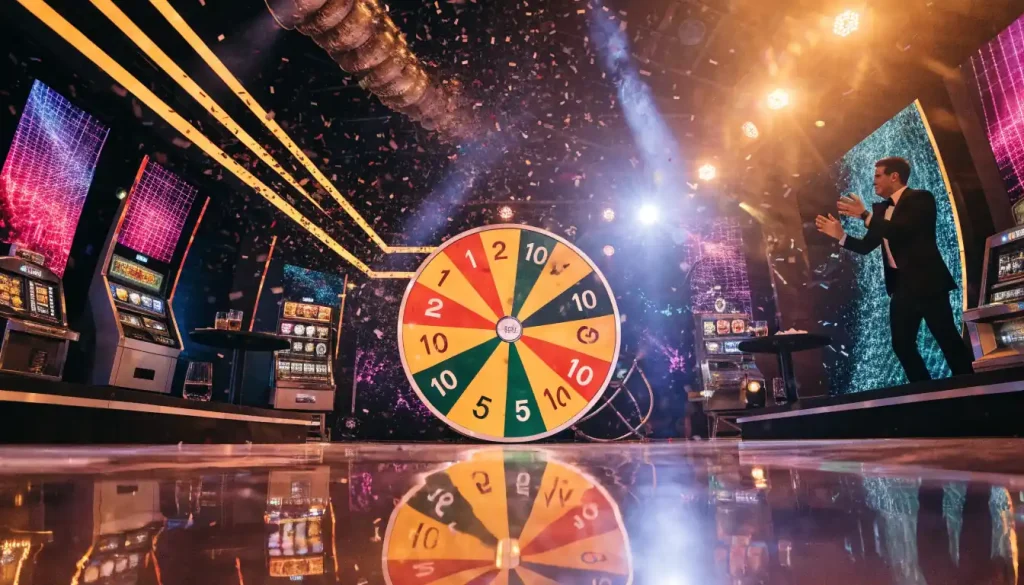
A guide to the studio stream and betting interface, with context on UK casino choices, licensing, demo play and bonus terms.
Table of Contents
- The Live-Casino Setting Behind an Online Game
- Crazy Time in the UK Casino Context
- Casino Sites and the Difference Between Live and Digital Play
- Where the Live-Casino Experience Takes Place
- Choosing a Casino Without an Unsupported ‘Best’ List
- Strategy Claims, House Edges and the Limits of What Is Known
- Demo Play and What a Live Stream Can Show
- Free Play, Free Spins and the Fine Print
- ‘Not on GamStop’ Searches and the UK Licence Question
- Bonuses, Live-Game Weighting and Wagering Terms
The Live-Casino Setting Behind an Online Game
An online casino game can put a studio on screen without putting the player in the room. In live dealer play, the action is streamed in real time from a studio, where a human dealer conducts the game. Bets are made through an on-screen interface. The result is a hybrid: a physical performance viewed through a digital service, with the player’s decisions entering by way of buttons and menus rather than words or gestures.
That distinction matters when a game such as Crazy Time is approached as a live-casino experience. The screen is not simply displaying a sequence generated entirely by software. It carries a live feed of a game being conducted by a person, while the betting interface handles the player’s participation. The two elements share the same screen, but they do different jobs. One shows the event; the other records the wager.
The format borrows some of the grammar of television. A camera gives the action a visible centre, and the dealer gives it a human presence. Yet it is not quite a programme being watched passively. The interface keeps the viewer involved in the proceedings as a participant, with bets entered on screen while the live action unfolds. Watching and playing occupy the same small rectangle, though they are not the same activity.
When looking for a place to enjoy Crazy Time, it helps to consider practical details alongside the live game-show experience. This reference highlights the available payout-speed information for each listed operator.
1. Chanze
Payout speed: 1-3 business days Chanze lists a payout speed of 1–3 business days, a useful detail to consider when reviewing its payment terms.
2. x3bet
Payout speed: 1-3 business days x3bet lists payouts as taking 1–3 business days, giving readers a clear payment-speed detail to bear in mind.
3. Jetsetspins
Payout speed: 1-3 business days Jetsetspins has a stated payout speed of 1–3 business days. This is the available practical detail for assessing its payment timing.
4. EvoSpin
Payout speed: 1-3 business days EvoSpin lists a payout speed of 1–3 business days, which may help readers consider its payment timing.
5. SlotoSport
Payout speed: 1-3 business days SlotoSport’s stated payout speed is 1–3 business days, a straightforward detail to keep in mind when reviewing its payment terms.
6. SpinFormula
Payout speed: 1-3 business days SpinFormula lists payouts as taking 1–3 business days. That is the available information on its payout timing.
7. BeOnBet
Payout speed: 1-3 business days BeOnBet has a stated payout speed of 1–3 business days, giving readers a useful point of reference for payment timing.
8. NightWin
Payout speed: 1-3 business days NightWin lists a payout speed of 1–3 business days. Readers can use this detail when considering its payment terms.
9. NightLuck
Payout speed: 1-3 business days NightLuck’s stated payout speed is 1–3 business days, the available detail on how quickly payouts are processed.
10. Amunbet
Payout speed: 1-3 business days Amunbet lists payouts as taking 1–3 business days, a practical payment-timing detail for readers to note.
There is a social history tucked into that arrangement. Casinos have long made games into public performances: the table, the dealer, the gathering of attention around an uncertain outcome. Online live play translates that arrangement for people who are not physically together. The studio supplies the visible ritual; the interface supplies a private point of entry. It is a modern compromise between the spectacle of a shared room and the convenience of an individual screen.
The dealer is more than a decorative detail. A human presence marks the difference between a live feed and a digital animation, and gives the activity a pace governed by the conduct of the game rather than by instant software responses. The camera also makes the process legible in a way that a purely digital display does not: there is an event being shown as it happens. The screen does not remove mediation. It makes mediation the whole arrangement.
For someone considering Crazy Time in an online casino, the basic question is therefore not only what appears on the screen, but what kind of game service is being encountered. In live dealer play, the visual stream and the betting controls work together. The player does not handle the equipment or speak across a table; participation is expressed through the interface. It is a recognisable casino ritual, redesigned around a remote connection.
That remote connection has practical consequences. Live games move at a slower pace than digital versions, and their minimum bets are higher. They also rely on a stable internet connection, since the stream is part of the experience rather than a decorative layer that can be ignored. A disruption can interrupt the view of the live action and make the relationship between the feed and the betting interface less seamless. The format asks for patience as well as connectivity.
The slower rhythm is not an incidental flaw. It follows from having a human dealer conduct the game in real time. Digital versions can proceed without waiting for a person to perform the next part of the sequence; a live game cannot be reduced to that same tempo without ceasing to be live. The exchange is clear enough: a visible human event in place of the compressed speed of software. Not quite television. Not quite a traditional table.
The interface, meanwhile, turns the player’s action into a sequence of selections made on screen. It is a practical layer, but also a cultural one. The casino table once arranged bodies around a shared surface; online play arranges choices around a display. The gesture becomes a click or tap, and the room becomes a stream. The old ritual survives, though the company is mostly elsewhere.
This is the setting behind the phrase “Crazy Time live casino game show” when it refers to online play: a human dealer, real-time studio footage and betting through an on-screen interface. The description establishes the format, not every detail of an individual game’s rules or presentation. Those depend on the game itself and should not be inferred merely from the fact that it is offered in a live-casino environment. A live feed tells how the game is delivered; it does not, by itself, explain every feature shown within it.
Mines Casino Game in the UK: What Can Be Known
The appeal of the format lies in that mixture of presence and distance. There is a person in the studio and an event unfolding now, but the player remains outside the room, connected through a screen. The game can feel more immediate than a purely digital version while remaining unmistakably remote. A camera cannot recreate the whole social life of a casino. It can, however, preserve one of its central habits: attention gathered around a game whose outcome has not yet arrived.
Crazy Time in the UK Casino Context
The phrase “Crazy Time casino UK” sounds like a request for a particular table. In practice, the first question is more basic: whether the casino offering live dealer games is permitted to serve customers in the UK. The legal status of the room comes before the name on its virtual door.
A live dealer casino is legal in the UK if it holds a licence from the UK Gambling Commission. That condition applies to the operator, not merely to the game being promoted. A familiar title, polished presentation or British-facing website does not replace the licence. The distinction is not decorative. It is the line between an operator inside the UK regulatory system and one outside it.
That can make searches for a UK Crazy Time casino seem deceptively simple. The game name may be the visible part of the search, but access depends on the casino behind it. A result that mentions Crazy Time does not, by that fact alone, establish that its operator is licensed to offer gambling to people in the UK. Nor does a UK-themed page settle the question. Marketing can travel more easily than regulation.
The UK Gambling Commission is the body whose licence matters for legal live dealer casinos serving the market. In the British model, the operator must hold the relevant permission to provide gambling services; the location of its business does not make that obligation disappear. A company based elsewhere is not exempt simply because its studio, offices or servers sit beyond British shores. The rule follows the service into the market.
There is a civic idea tucked inside that arrangement. Gambling is not treated as an ordinary digital product that becomes legitimate merely by being reachable. The state places responsibility on the business that makes the game available. That choice reflects a familiar regulatory instinct: private entertainment may be sold, but the seller cannot pretend that the transaction has no public consequences.
For Crazy Time live casino access, then, the meaningful distinction is not between a casino with an elaborate lobby and one with a spare design. It is between a licensed operator and an unlicensed one. The same condition applies whether the casino is described as a live casino, a game-show casino or simply a place to play. Labels multiply; the licensing test does not.
UK Licensing
Legal live dealer casinos serving the UK market must hold a licence from the UK Gambling Commission; operators without this licence are outside the UK regulatory system.
This also explains why “Crazy Time casinos UK” should not be read as a guarantee that every result is suitable for UK play. A game title can be used to attract attention, while the legal status belongs to the company offering it. The operator’s UK Gambling Commission licence is the relevant condition for a legal live dealer casino. Without it, the familiar name on the screen tells very little about the standing of the service.
The rule is not a recommendation dressed up as law. It is the basis on which online gambling can legally be offered to UK customers. A casino may present itself as international, independent or available across borders; those descriptions do not undo the requirement. If it is offering live dealer gambling into the UK, a UK Gambling Commission licence is required.
There is a quiet asymmetry here. The player sees a game and an interface; the regulator sees a business supplying a controlled activity. The law attaches its condition to that business, not to the dramatic packaging around a game-show title. A wheel, a presenter or a branded studio may make the experience feel like television. The licence question remains firmly administrative.
That is why the phrase “Crazy Time live casino UK” has a legal answer before it has a venue answer. The relevant standard is clear: legal live dealer casinos in the UK must hold a UK Gambling Commission licence. The title alone cannot establish that status, and a casino’s appearance cannot stand in for it. Regulation is less theatrical. It is also the part that decides whether the offer belongs in the UK market at all.
Casino Sites and the Difference Between Live and Digital Play
A casino site can place live and digital games beside one another, but the resemblance ends at the shared screen. Digital play is generated by software and tends to move at a quicker pace. A live game runs more slowly: its progress depends on events unfolding at the table rather than on a sequence produced entirely by a computer. That difference affects the rhythm of play, the amount of time between decisions and the practical conditions needed to stay connected.
Crash Casino Games in the UK: How They Work
For a game-show title such as Crazy Time, the word “live” points to a different kind of transaction with time. The screen is not merely displaying a result; the game is proceeding in real time. A pause in the action is part of that format, not necessarily a technical fault. Compared with a digital version, the live table asks for more patience. It also makes a stable internet connection important, because a stream that breaks up can interrupt the view of what is happening.
That dependency is easy to overlook when games appear as neat tiles in a casino lobby. The interface can make every option look equally immediate, but the underlying formats are not interchangeable. Digital games can proceed without a live table’s slower cadence; live play has to accommodate the movement and timing of the game itself. A player weighing the two is therefore choosing not only a visual style but also a pace and a degree of reliance on the connection.
Digital Play
Generated by software, moving at a quicker pace with lower minimum bets.
Live Dealer Play
Real-time studio action with a slower cadence, higher minimum bets, and a dependency on a stable internet connection.
Live games also have higher minimum bets than digital versions. That difference matters independently of the stream. A player who expects the same entry point across both formats may find that the live option asks for more at the table. The comparison is not simply between a polished picture and a simpler one; it includes a different minimum and a slower tempo. Those conditions can make a live session feel more deliberate, though deliberateness is not the same thing as control over the outcome.
The phrase “best Crazy Time casino sites” suggests that a single ranking could settle the matter. Yet a list cannot answer the practical question of whether a live format suits a player’s circumstances. A site’s game catalogue does not make a weak connection more stable, or turn the live table into a digital game with a faster rhythm. Nor does the label “best” explain whether the higher minimum fits the amount someone intends to spend. Those are separate considerations, and a ranking alone tends to flatten them.
The same distinction applies to searches for Crazy Time scores or strategies. A score or a running display may be part of how a particular game presents itself, but it should not be mistaken for a change in the basic conditions of live play: the table continues in real time, at a slower pace, with a connection required to follow it. No claim about a site’s score tools or a special strategy follows merely from the fact that it offers a live game. The format can be described; claims about additional features need their own evidence.
Bonuses are another tempting shortcut in comparisons between casino sites. A promotion may make a digital game look more attractive on paper, but it does not alter the live game’s pace, connection needs or higher minimum bets. Nor does a bonus, by itself, establish that a particular game is the better fit. The conditions of an offer are a separate matter from the mechanics and demands of the format.
In the end, live and digital play ask for different kinds of attention. One moves at the pace of a real-time table and depends on an uninterrupted connection; the other is generally quicker. Neither label settles which experience is preferable. The difference is practical before it is theatrical.
Casino Dice Games in the UK: Odds, Sites and Stakes
Where the Live-Casino Experience Takes Place
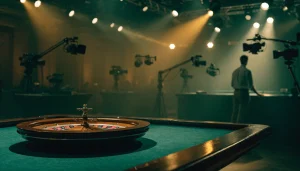
For anyone wondering where to play Crazy Time, the answer is less a physical address than a particular kind of screen: a live studio feed paired with a betting interface. The room itself is elsewhere. What reaches the player is a real-time view of a studio, where a human dealer presents the game while bets are entered on screen.
That arrangement makes the screen do two jobs. It is a window onto a staged, human-run setting, and the control surface for taking part. The dealer and studio belong to the broadcast; the betting panel belongs to the online game. They share the same display, but they are not the same thing. One supplies the visible event, the other records a player’s choices.
The distinction matters when “playing live” is taken to mean that everyone is gathered around a table. They are not. The studio is the setting for the streamed action, while participation takes place remotely through the interface. The camera gives the game a sense of place; the controls keep the practical business of betting on the screen. A studio can feel close without being physically accessible. Television has long understood this useful ambiguity.
A search for a Crazy Time casino wheel may picture a wheel as the whole experience. But the live-casino setting is broader than any single object shown in a broadcast. It includes the dealer, the studio surroundings and the interface through which a player joins in. The wheel may be the image that gives the game its identity, yet the defining feature of live play is the connection between a real-time studio presentation and on-screen betting. There is a human presence, not merely an animated display.
This is also why “where to play” can mean two different things. It may refer to the casino site that makes the game available, or to the setting in which the game appears once opened. The latter is a studio transmitted to a personal screen; the former is the route to that stream. Confusing the two turns a question about the format into a search for a room that the player will never enter.
The arrangement borrows from broadcast entertainment without becoming ordinary television. A viewer watches a live presentation, but the interface allows betting to happen alongside it. The dealer is visible in the studio; the player remains outside it, following the same unfolding scene through a screen. The result is a carefully divided space: a public performance on one side, private participation on the other.
So the live Crazy Time experience takes place both in the studio and beyond it. The studio supplies the real-time human presentation; the online interface carries the player’s bets. Not the same room.
Choosing a Casino Without an Unsupported ‘Best’ List
The phrase “best Crazy Time casino” sounds like a request for a clear winner. But a casino’s suitability cannot be separated from the legal conditions under which it offers play. In the UK, a live dealer casino is legal only if it holds a licence from the UK Gambling Commission. That is the first distinction to make; glossy presentation and confident claims do not replace it.
A licence is a threshold, not a trophy. It establishes that an operator is authorised to offer live casino games in the UK, rather than proving that one venue is better than another for every player. The word “best” can conceal several different judgements: ease of use, range of games, customer service or the feel of a particular table. Those are not interchangeable, and a single ranking can make them seem so.
Choosing a Casino
- Verify the operator holds a UK Gambling Commission licence
- Check if the game contributes to the bonus and its weighting
- Review the wagering requirements and maximum bet limits
- Confirm the minimum bet fits your intended budget
The same care applies when Crazy Time is described as a slot. The label may appear in casual conversation, but the question of choosing a casino still turns first on the operator’s legal status. A game’s name or presentation does not change the licence requirement for the casino offering it.
The UK’s approach gives the regulator a visible role in deciding who may serve local customers. This is more than paperwork at the edge of the experience. It marks a public boundary between authorised gambling and an operator outside the domestic system. A casino can be entertaining, polished or popular and still fail that basic test.
Casino results are another kind of claim that can sound more conclusive than they are. A result records what happened in a particular round; it does not, by itself, establish that a casino is better or that a past outcome predicts the next one. The word “results” may refer to a game outcome, a record of rounds or a comparison between casinos. Those meanings should not be collapsed into a verdict on where to play.
Nor does a catalogue of supposed strategies settle the choice. The search for the best casino and the search for the best way to play are separate questions. A venue’s UK licence addresses whether it may lawfully offer live dealer gambling; it does not turn a staking approach into a reliable route to a favourable result.
A sensible comparison therefore begins with a narrow question: does the casino hold a UK Gambling Commission licence? Only after that threshold is clear can other preferences be considered on their own terms. No ranking can make the legal distinction disappear.
The distinction is plain. The judgement is not.
Strategy Claims, House Edges and the Limits of What Is Known
A strategy for a casino game is only as sound as the rules and probabilities behind it. The word “strategy” can mean choosing between available bets, managing a budget or trying to predict what happens next; those are different activities, though promotional writing often bundles them together. For Crazy Time, claims about a winning system or a dependable way to anticipate results need support from the game’s own rules and evidence. A confident label is not evidence.
That distinction matters when a tracker is involved. A record of previous outcomes describes what has already happened. It does not, by itself, establish what a later round will produce, and past results should not be treated as a signal that a particular outcome is due. Statistics can organise observations; they cannot turn them into a guarantee. Tracking is bookkeeping, not a forecast.
The same caution applies to stories about the game’s history. A title, a studio setting or a record of past results cannot stand in for a documented account of how the game was made or how its rules developed. Without reliable detail, a history assembled from guesswork would only give speculation the appearance of research. The honest boundary is a narrow one: explain what can be checked, and leave the invented backstory out.
A comparison with blackjack shows why systems deserve scrutiny. Blackjack has a house edge, and staking methods such as Martingale can still end in losses. Raising a stake after a loss may alter the size and sequence of bets; it does not remove the underlying risk. That is a caution about blackjack, not a strategy for Crazy Time. Transferring a betting system from one game to another without evidence is less analysis than costume.
Chicken Road Game Casino UK: What the Label Means
The house edge is also not a measure of whether a particular player will win a particular round. It describes an advantage built into a game over repeated play, while individual outcomes remain uncertain. Any claim that a tracker, progression or pattern defeats that structure would need more than a run of results or a persuasive chart. A spreadsheet can look stern. It is still a spreadsheet.
Before play, the rules and paytable matter more than a system’s name. They set out what bets are available and how outcomes are settled; a plan that ignores them is not meaningfully game-specific. A fixed budget can help keep entertainment within limits, but it does not improve the chance of a result, and losses should not be chased. This is entertainment, not gambling advice.
Demo Play and What a Live Stream Can Show
A request for a Crazy Time demo may mean a chance to inspect the game without staking money, or simply a way to see what the live format looks like. Those are different things. A live dealer game presents studio footage in real time, with a human dealer and an on-screen interface through which players place bets. That describes the format; it does not, by itself, establish that a no-cost demo is available.
Deal or No Deal Casino UK: How the Game Works
The distinction matters because a stream can make a game feel unusually legible. There is a person in a studio, rather than only an animated table or a sequence of computer-generated images. The action is happening as it is shown, and betting takes place through the screen. But seeing the dealer and interface is not the same as being offered a separate practice mode. Nor does the word “demo” turn a live stream into one.
This is the narrow, useful meaning of a Crazy Time live-casino demonstration: an opportunity to understand the kind of experience involved, if a stream is accessible. It can show the human and studio elements of live play, alongside the interface used to place bets. It cannot establish whether a particular casino makes the game available without a stake, or whether any such mode has the same conditions as paid play. Those details depend on what the operator actually offers.
There is a small social theatre in the arrangement. The dealer performs within a camera’s frame; players meet the game through controls on a screen, not by gathering around the studio floor. The technology joins these two settings without making them identical. Real-time pictures offer immediacy, while the interface turns that spectacle into a sequence of decisions. A polished stream may feel close to a shared event. It remains an online casino game.
That is also why “tips” should not be confused with what a demo can show. Watching a dealer and observing the betting interface may clarify the format, but it does not demonstrate a reliable way to win. Nor does it make a stream evidence of future outcomes. A demonstration is a view of presentation and interaction, not a forecast.
Before any live play involving money, a budget set in advance gives the activity a boundary; it should not be expanded to recover losses or extend a winning run. The content is for entertainment purposes only, not gambling advice. The more vivid the stream, the easier it is to forget that the camera changes the setting, not the nature of the wager.
A live stream can make the game visible. That is not the same as making it free.
Free Play, Free Spins and the Fine Print
“Free” can mean two different things in a casino advert. It may describe a version of a game offered without a cash stake, or it may refer to free spins attached to a welcome offer. The phrases sound close; the terms behind them are not interchangeable.
A free version of a live game should not be confused with a cash-paying game. A stream may show a dealer and an on-screen betting interface, but that alone says nothing about whether a particular casino provides a free-play mode, what it contains, or whether it can produce money. The word “free” is not a promise of winnings.
Welcome offers have a different purpose. A specialist review of UK casino promotions describes most welcome offers as free spins for slot games, not credits for live tables. Those spins are tied to the relevant slots and cannot be transferred to a live game such as Crazy Time. A promotion labelled as a casino bonus, therefore, does not automatically make every game on the site eligible.
This distinction matters because promotional language often places offers and games side by side, inviting the impression that one applies to the other. The terms decide. An offer may specify which games qualify, how play contributes towards any wagering requirement, and other conditions. The headline is only the doorway; the small print determines where it leads.
The same caution applies to reviews. A favourable account of a casino or its live games cannot establish that a free version is available, that a bonus can be used on that game, or that play will pay real winnings. Reviews can describe an experience, but a promotion’s own terms govern its use. Neither should be treated as a substitute for the other.
For anyone comparing free play with free spins, the useful distinction is simple: free play concerns access to a game without staking cash, while free spins are a promotional feature associated with slots. In the UK offer landscape described by specialist reviews, the latter are not live-table currency. A free-play label, meanwhile, does not establish real-money payouts.
Terms, not labels.
‘Not on GamStop’ Searches and the UK Licence Question
The phrase “not on GamStop” can sound like a description of a casino’s legal standing. It is not. GAMSTOP is a self-exclusion programme; the relevant legal test for a live dealer casino serving the UK is whether it holds a licence from the UK Gambling Commission. A site’s claimed relationship with a self-exclusion scheme does not replace that test.
Attention: A casino’s relationship with the GAMSTOP self-exclusion programme does not replace or verify the requirement for a UK Gambling Commission licence.
That distinction matters when the name of a particular game is attached to the phrase. A search for a Crazy Time casino outside GAMSTOP may be looking for an operator that does not participate in the programme, or simply for a route around an exclusion. Neither interpretation establishes that the casino is licensed to serve UK customers. Nor does the wording itself verify an operator’s actual status.
For UK players, the rule is plain: live dealer casinos are legal when they hold a UK Gambling Commission licence. A casino without that licence is outside the UK regulatory system, regardless of how its website describes its access, games or connection with GAMSTOP. Familiar branding is not a licence. A live game’s appearance on a site does not prove the site is authorised either.
This is a narrow distinction, but an important one. Self-exclusion and gambling regulation address different things. GAMSTOP concerns a person’s exclusion from participating operators; the Commission’s licence governs whether an operator may legally offer gambling to customers in the UK. Treating one as a substitute for the other blurs the boundary between a personal safeguard and public oversight.
The same care applies to searches for Crazy Time casinos “without” or “not on” GAMSTOP. Those phrases are not a reliable shortcut to a provider’s legal position. The deciding point remains the operator’s UK Gambling Commission licence, not the wording of an advert or a result page. Where a site’s licence cannot be established, its status should not be inferred from the game it displays.
A search label is not a safeguard.
Bonuses, Live-Game Weighting and Wagering Terms
A bonus can look generous in its headline and become modest at the table. The difference is often in the wagering terms: qualifying play may count towards a bonus target, but not every game contributes equally. Live casino games often receive only a small share of that contribution. A stated weighting of 10%, for instance, means that only a fraction of qualifying live-game stakes is counted. The figure describes a possible term, not a universal rule.
That distinction matters for a Crazy Time casino bonus. A live game may be included in a promotion yet contribute so little that the bonus takes longer to clear than its headline suggests. Eligibility and weighting are separate questions: the terms may permit play on a game while assigning it a low contribution. The precise wording governs.
The welcome offer presents another obstacle. One specialist review describes most UK welcome offers as free spins for slot games, which cannot be used at live tables. A slot promotion therefore does not become a live-game bonus simply because it appears beside a casino’s live selection. Its format and eligible games are set by the offer terms.
A deposit bonus and a no-deposit offer also have different conditions, but neither label says by itself whether live play qualifies. The terms should be read for eligible games, contribution weighting, wagering requirements and any maximum bet limit. A bonus may have little practical value at a live table if the game contributes only a small share, even when participation is allowed. Fine print does the arithmetic.
The phrase “Crazy Time bonus” can suggest a promotion built around the game itself; a casino welcome bonus may instead apply to a separate category of play. Nor does a bonus establish anything about casino payouts: promotional credit and withdrawable winnings are distinct matters governed by the offer’s rules.
Bonuses are designed to shape where and how play takes place. Their value is less a matter of the headline than of the conditions beneath it. A budget set before play helps keep that distinction from turning into pressure to continue. This is entertainment, not gambling advice.
What are the different types of roulette you can play with a live dealer?
Live dealer roulette can include European, American and French Roulette. American Roulette has both 0 and 00, while European Roulette has a single 0; in French Roulette, an even-money bet loses only half when the ball lands on zero.
How can you win live dealer roulette?
You win when the ball lands on a number you selected. In French Roulette, an even-money bet loses only half if the ball lands on zero.
Why does the dealer always win in blackjack?
The dealer does not always win: you can beat the dealer by finishing closer to 21 without going over. Blackjack still has a house edge, so the dealer has an advantage over time.
Casino Games
American Roulette at UK Online Casinos: 0 and 00
American roulette adds a double-zero pocket to the familiar wheel, affecting its layout, betting options...

Aviator Casino Game in the UK: Rules and Play
A clear look at UKGC licensing, offshore casinos, demo claims, bonuses and payment routes around...

Three-Reel Slots in UK Online Casinos
Explore the classic reel format, real-money and free-play settings, variance, and the UK rules governing...

5-Reel Slots in the UK: Demos, Stakes and Play
Five reels define the format, while demo play, bonus features and the casino setting shape...

Bonus buy slots in the UK: trying demo play
Practice modes can show how a bonus-buy feature works, but availability varies by game and...

UK Online Casino Fast Payouts: Keno Returns Explained
A keno paytable shows possible game winnings, while an account withdrawal follows a separate operator...

UK First-Deposit Casino Bonuses: How Offers Work
A first-deposit label describes when an offer applies, while eligibility, rewards and withdrawal rules depend...

High-Volatility Slots in the UK: How They Work
Volatility describes the general frequency and scale of slot wins, not a guarantee or timetable...

Keno at UK Online Casinos: Odds and How to Play
Keno outcomes depend on the numbers selected before a random draw, while paytables determine how...
Live Casino UK: How Online Tables Work
A live casino pairs a physical table broadcast with on-screen controls, while the lobby brings...

Low-Volatility Slots in the UK: How They Work
These games tend to distribute returns as more frequent, smaller wins, but volatility cannot predict...

Online Slot Payout Percentage: What RTP Means
A payout percentage describes a theoretical return across repeated play, not the result of any...

Best RTP Casino Slots in the UK: How Returns Work
An advertised return is a long-run calculation, not a prediction of session results; volatility helps...

Video Slots UK: Reels, Bonuses and How Play Works
A clear guide to reel patterns, bonus features, casino play and the differences between free...

Casino Dice Games in the UK: Odds, Sites and Stakes
A clear look at how casino dice wagers work, what chance can reveal, and where...

Chicken Road Game Casino UK: What the Label Means
The Chicken Road label alone does not confirm a game’s format, availability, rewards or casino...

Crash Casino Games in the UK: How They Work
Crash games turn an uncertain wager into a rising visual, while licensing, payments and promotional...

Deal or No Deal Casino UK: How the Game Works
The format turns hidden briefcase values and a cash offer into a decision about whether...

European Roulette Online Casinos in the UK
A practical guide to the single-zero wheel, betting choices, payouts and how European roulette differs...

Fastest Payout Online Casino UK: What Claims Mean
A fair comparison depends on verified casino-specific times, consistent conditions and a clear definition of...
French Roulette Online Casinos in the UK
French roulette pairs the familiar European wheel with rules that soften zero’s impact on even-money...

Hi-Lo Casino UK: How the Card Game Works
Hi-Lo rules vary by format, including how ties, matching values and successful predictions are treated....

High-RTP Slots in the UK: How RTP Really Works
RTP is a long-run feature of a slot’s mathematical design, not a prediction of what...

JetX Casino Game in the UK: What the Label Means
A careful look at JetX’s classification, demo claims, UK casino access and the limits of...

Live Baccarat Online Casinos in the UK: How It Works
A look at baccarat scoring, live-dealer play, UK licensing, stakes and the terms that can...

Live Blackjack Online Casinos in the UK: How It Works
A clear guide to the dealer, betting interface, table limits and rules behind live blackjack...
Live Casino Lightning Roulette in the UK: How It Works
A live dealer conducts the game in a studio, while the online interface handles bets...

Live Dream Catcher Casino UK: How the Game Works
A guide to the live dealer format, physical wheel, site considerations, and what demo play...

Live Roulette UK: English-Speaking Dealers
A look at the dealer, streamed wheel, betting interface and the limits of what live...

Mines Casino Game in the UK: What Can Be Known
An overview of Mines in the wider casino landscape, including demo play, prediction limits and...

Monopoly Live Casino UK: How Live Play Works
A practical look at the studio, on-screen controls and the limits of treating a live...

Online Bingo in the UK: Rooms, Slots and Play
Bingo rooms run on tickets, shared draws and completed patterns, while slots remain separate games...

Online Casino Games for Real Cash in the UK
A practical look at spin costs, withdrawable wins, bonus conditions and the limits of judging...

Online Casino Tournaments UK: Free Entry Explained
Tournament terms shape whether entry is free, which spins count, and how scores relate to...

Online Casino Without ID in the UK: What to Expect
A sign-up without document uploads does not mean anonymous play; UKGC-licensed casinos must verify players,...

Plinko Casinos in the UK: Licensing, Play and Payments
Plinko’s legal context, demo limits, casino terms and payment options depend in part on whether...





























































































































































































































































