
UK crypto casinos with no KYC: rules and risks
 Available in GB

UK licensing requirements still apply to gambling offered in Great Britain, while offshore operators set their own account checks and cashout processes.
Table of Contents
- The UK Rulebook Stops at the Offshore Border
- Bitcoin Cash Deposits: Wallets, Confirmations and the Public Ledger
- Crypto Slots in Britain Meet Rules Offshore Sites Do Not
- No-KYC Accounts and the Limits of the Promise
- Bonuses, Wagering and the Offshore Small Print
- Cashouts: Fast Networks, Slower Queues
- BCH Beside Bitcoin: A Difference in Block Capacity
- What “Best” Can Mean Without a UK Licence
- Choosing a Cryptocurrency Casino Without a Ranking
- USDT Searches, BCH Evidence
The UK Rulebook Stops at the Offshore Border
A casino’s technology can travel across borders without carrying its legal status with it. A website may be accessible from Britain, display prices in familiar currency and offer games to people at home; none of that makes it a UK-licensed casino. The important question is whether the operator holds the licence required to offer remote gambling to consumers in Great Britain.
That requirement follows the customer-facing activity, not the physical location of a server or other key equipment. The UK Gambling Commission regulates remote gambling offered to people in Great Britain even when the machinery supporting the service sits elsewhere. The regulator is responsible for commercial gambling in Great Britain, including online casinos. Distance is no exemption.
The framework rests on a simple distinction. The Commission grants operating licences to businesses that provide gambling, and personal licences to individuals performing specified roles in the industry. Those permissions belong to the regulated system; a company cannot replace them with an offshore registration or a licence issued by another jurisdiction. An offshore casino may have permission to operate where it is based, but that does not turn its service into one authorised for the British market.
Cryptocurrency makes the boundary unusually visible. UK-licensed operators are not permitted to accept cryptocurrency. So a casino presenting crypto as a way to fund real-money play is not offering that payment service under a UK Gambling Commission licence. The point is not that the payment is technologically exotic. It is that the UK rulebook does not allow its licensed operators to take it.
This matters when online crypto casinos are described as though they were simply another branch of the domestic casino market. They are not. A site can be reached from a British phone or laptop and still sit outside the UKGC system. A mobile interface changes the screen; it does not change the regulator. Nor does a new launch acquire British authorisation by being new, polished or easy to access.
Casinos that accept Monzo UK: payment options
The distinction is sometimes blurred by the loose word “UK”. It can refer to where a player lives, where a website can be opened, where a company is incorporated, or where its licence was issued. Those are different things. For commercial remote gambling offered in Great Britain, the relevant question is whether the operator has the appropriate UKGC operating licence. A foreign licence may describe the operator’s status elsewhere, but it is not a substitute for that permission.
There is a social idea behind this architecture. Gambling is not treated as an ordinary online purchase whose rules end at the seller’s address. The state claims jurisdiction over the service sold to people within its territory, even if the operator has arranged the technical infrastructure abroad. That is why the Commission’s remit follows the offer to British consumers rather than the server’s coordinates. The border is regulatory, not merely geographic.
A crypto online casino that serves British customers from offshore may therefore be accessible without being part of the British regulated market. The distinction should not be softened into “less regulated” or “internationally licensed” when what is at stake is the absence of a UKGC licence. Those descriptions can make a different legal position sound like a minor variation in paperwork. It is not.
Casinos That Accept UPaycard in the UK: Payment Guide
The practical consequence is a different set of protections and routes for resolving problems. An offshore casino does not sit within the UKGC regulatory safety net. Players using it do not have access to UKGC dispute resolution or an approved Alternative Dispute Resolution service through the Commission’s system, and the site is not integrated with GamStop. The absence of those protections does not itself mean an individual has committed an offence by gambling offshore; it means the operator is outside the British licensing framework.
This is the essential context for anyone comparing online casinos accepting crypto with UK-licensed sites. The two categories are not interchangeable, even when their games look similar or their pages are presented in the same language. The UK licence is not a decorative badge that can be inferred from accessibility, branding or the presence of familiar games. It is a specific permission issued by the domestic regulator, and cryptocurrency acceptance is incompatible with the terms imposed on UK-licensed operators.
No UKGC Licence
Offshore crypto casinos operate outside the UK Gambling Commission’s regulatory safety net, meaning players lack access to UKGC dispute resolution, approved ADR services, and GamStop integration.
The rulebook does not follow every website through every border. It does, however, define which businesses are authorised to sell remote gambling to Great Britain. For crypto casinos, that line is decisive. The interface may be local. The licence is not.
Bitcoin Cash Deposits: Wallets, Confirmations and the Public Ledger
A Bitcoin Cash deposit begins with a payment instruction from the casino: an address, and sometimes a QR code, for the account holder to use in a BCH wallet. The player sends the chosen amount from that wallet to the supplied address. The casino then waits for the transaction to appear on the Bitcoin Cash network and meet its confirmation requirement before crediting the account.
The address matters. A crypto payment is not a bank transfer that can be redirected by a bank if the details are wrong; it is a blockchain transaction sent to a specific destination. The network must also be Bitcoin Cash. A similar-looking address or a different cryptocurrency is not a harmless variation. The casino’s payment screen and the sending wallet need to refer to the same asset and network.
A specialist review reports that BCH casino deposits are commonly credited after a single on-chain confirmation, with that confirmation taking 10 minutes. This is a description of the practice it observed, not a promise that every deposit will arrive on that schedule. Network conditions and the casino’s own crediting process both matter. Before confirmation, the transaction has been broadcast but has not yet reached the stated threshold for credit.
UK Casinos That Accept Boku and Pay by Phone
That distinction separates network progress from casino accounting. A wallet may show that a transaction has been sent while the casino balance remains unchanged. The transaction can be checked on the public blockchain, where its status and movement between addresses are visible. A reference or transaction identifier can help locate it; it does not make the payment private.
Wallet-based payment is sometimes mistaken for anonymity because it need not display a player’s legal name in the way a card payment does. But the blockchain records transactions publicly. Addresses are not automatically labelled with their owners, yet they can be connected to identities through other information. Chain-analysis firms can often follow a deposit back to a recognised exchange, where an account may be associated with a customer. A wallet is a means of holding and sending funds, not a cloak.
That public record changes the meaning of “private”. A payment can be pseudonymous at first glance and still leave a durable trail. Reusing addresses or linking wallet activity to a named exchange account can make the trail easier to interpret. The ledger does not publish a player’s name beside every transfer, but the absence of a name in the transaction itself is not proof that nobody can identify its origin.
For people comparing casinos accepting crypto deposits in the UK, the payment method also has a straightforward local distinction: no UK-licensed casino currently takes Bitcoin Cash directly. A site that offers BCH deposits is therefore not offering a UK-licensed BCH payment route. The mechanics may look simple—copy an address, send the funds, wait for confirmation—but the transaction remains visible long after the casino screen has moved on.
The ledger remembers.
BCH Deposit Process
Step 1: Obtain Address
The player receives a payment address or QR code from the casino.
Step 2: Send Funds
The player sends the chosen Bitcoin Cash amount from their wallet to that address.
Step 3: Network Confirmation
The casino waits for the transaction to appear on the blockchain and meet confirmation requirements (commonly one confirmation taking 10 minutes).
Step 4: Account Credit
Once confirmed, the casino credits the player’s account balance.
Crypto Slots in Britain Meet Rules Offshore Sites Do Not
A slot can look much the same on either side of a regulatory boundary: reels turn, symbols settle, and the next spin waits behind a button. The rules governing that interval are less alike. In Britain, a slot offered by a licensed operator is not simply a piece of software with a payment option attached. Its pace and the way it can be played are regulated.
Autoplay is banned for online slots in Britain. Each spin must also last at least two and a half seconds. Those requirements shape the rhythm of play: the machine cannot keep turning unattended, and it cannot compress repeated spins into a blur. The pause is part of the rule, not an optional setting.
That pause may seem modest, but it expresses a particular view of gambling. A game that demands a fresh action and cannot accelerate beyond a set pace leaves more interruption in the sequence. It does not remove risk, or guarantee that anyone will stop. It does make the tempo a matter of public regulation rather than a design choice left entirely to the operator.
The distinction matters when a slot is reached through a crypto casino. Paying with cryptocurrency does not make a game exempt from British requirements. An operator offering remote gambling to people in Great Britain must hold the relevant Gambling Commission licence, wherever its equipment is located. A site outside that system does not become a British-licensed casino because its games resemble those found on licensed sites, or because a slot opens smoothly on a phone.
Bank Cheque Casinos in the UK: How Boku Differs
For licensed operators, there are further limits on the amount staked per online slot game cycle. The maximum is £5 for customers aged 25 and over, and £2 for those aged 18 to 24. The £5 limit for all adults took effect on 9 April 2025. These are controls on the game itself, not rules about which currency appears in an account. A crypto label cannot make a different stake limit.
A specialist review describing the casinos under discussion characterises each as operating under a Curacao or similar offshore licence. That is a description of the sites covered by that review, not a permanent map of every crypto casino: operators and their licensing arrangements can change. The practical distinction is that an offshore licence is not a UK Gambling Commission licence. The British rules on autoplay, spin duration and stake limits do not become the rules of an offshore site merely because a player is in Britain.
This leaves a familiar visual paradox. The same sort of slot may be presented with polished graphics and recognisable features, while the conditions around play differ substantially. A British-licensed version must follow British controls; an offshore version sits outside the UKGC regulatory safety net. Similar screens do not mean similar obligations.
The safeguards surrounding licensed play extend beyond the spin. Operators must verify age before allowing a customer to deposit, and licensed casinos must provide responsible-gambling tools, including self-exclusion. They must also prompt new customers to set a financial limit before their first deposit and make account-level limit controls accessible. Those requirements belong to the regulated service, not to the appearance of a slot or the currency used to fund an account.
UK Slot Rules
UK-licensed slots must ban autoplay, ensure each spin lasts at least 2.5 seconds, and adhere to stake limits of £5 for adults 25+ and £2 for those aged 18–24.
That is why “crypto slots in Britain” can describe two quite different things. It may mean a slot supplied by a UK-licensed operator within the British rulebook, or a slot on an offshore casino accessible from Britain but outside that system. The second may feel familiar, but familiarity is not regulatory status. Offshore play by individuals is not criminalised in the UK; that does not provide UKGC dispute resolution, an approved alternative dispute resolution route, or GamStop integration.
The British approach puts friction into the game: a required pause, a ban on autoplay and a cap on stakes. Offshore sites are not bound by those UKGC controls, and their own settings should not be mistaken for British standards. A faster sequence can feel like convenience. It can also mean fewer natural breaks. The interface is not the rulebook.
No-KYC Accounts and the Limits of the Promise
A Bitcoin Cash casino outside the UK Gambling Commission’s licensing system may pair wallet-based deposits with limited identity checks. A specialist review describes some offshore BCH casinos as allowing account creation with only an email address and password, without the traditional KYC process at signup. That is a description of an account-opening arrangement, not a guarantee that no checks will ever be requested.
Anonymous Crypto Casinos in the UK: What to Know
“No KYC” also says nothing reliable about the privacy of a payment. Bitcoin Cash transactions are recorded on a public blockchain, and chain-analysis firms can often connect a deposit to an exchange account already associated with a person. An email-only registration does not erase that trail. Nor does it prevent an operator from asking for identity information later.
The more consequential omission is institutional. An offshore casino has no UKGC complaints route and does not provide access to an approved Alternative Dispute Resolution service under the British system. It is also outside GamStop: a site accepting BCH without a Commission licence is not part of the scheme. The account may be quick to open; the protections familiar from a UK-licensed casino are not attached to it.
That distinction matters because British law places the licensing obligation on operators offering remote gambling to consumers in Great Britain. It does not criminalise an individual for gambling offshore. Lawful conduct by the player, however, is not the same as a UKGC regulatory safety net. The two are easily confused, and not interchangeable.
Before depositing, a UKGC licence number can be checked against the Commission’s public register. An offshore casino without that licence cannot offer UKGC dispute resolution or GamStop integration. A light-touch signup may remove friction at the door. It does not make the operator accountable to the British regulator, or the transaction invisible.
Bonuses, Wagering and the Offshore Small Print
A crypto welcome offer often presents itself as a deposit match: a specialist review of BCH casinos describes matches in the 100%–200% range, paired with wagering requirements of 20x–50x the bonus amount. The headline percentage is the part designed to be read quickly. The condition beneath it is designed to be read carefully.
A wagering multiple sets how much must be played before bonus funds, or winnings linked to them, can be withdrawn. At 20x, a bonus of £10 would mean £200 in qualifying bets; at 50x, the same bonus would mean £500. These are illustrations of the arithmetic, not advertised offers. The base matters: a requirement calculated against the bonus alone is not the same as one calculated against the deposit and bonus together. The wording in the terms determines which applies.
Do
- Read the specific wagering requirements in the terms
- Check if the multiplier applies to the bonus alone or deposit plus bonus
- Verify which games contribute to wagering
Don’t
- Rely on the headline percentage of a welcome match
- Assume offshore bonus terms match UKGC’s 10x cap
- Mistake a bonus code for a guarantee of value
That distinction can make a generous-looking match less generous in practice. A player may also find that only certain games contribute towards wagering, or that bonus funds expire or are subject to a maximum withdrawal. Those conditions cannot be assumed to apply across offshore sites; they need to be read in the specific offer’s terms. A bonus code is merely a route to an offer, not evidence of its value or of the rules attached to it.
For casinos serving Great Britain under a UK Gambling Commission licence, the position is different. A specialist account of the Commission’s rules reports that, since 19 December 2025, wagering requirements on bonuses have been capped at 10x. That cap belongs to the licensed system. It does not govern an offshore casino simply because the site accepts British customers or describes its offer in familiar terms.
This is one of the quieter distinctions between the two markets. UK regulation does not treat promotional wording as a substitute for enforceable standards: licensed operators are subject to the Commission’s rules, while an offshore offer sits outside that UKGC framework. The number on an offshore banner may be familiar; the protection behind it is not.
No-deposit offers are another case where the small print carries more weight than the headline. A specialist review reports that these offers are less common at BCH casinos than at traditional UK sites. When they do appear, the reported pattern is high wagering alongside a low maximum cashout. “Free” therefore describes the entry point, not necessarily the amount that can ultimately be withdrawn. The conditions can leave a player with a balance that is difficult to convert into withdrawable funds.
Diners Club at UK Casinos: Deposit Acceptance
The same caution applies to claims of the best crypto casino bonus or a particularly large sign-up offer. A percentage alone cannot establish value. The wagering base, eligible games, expiry conditions and cashout restrictions all shape what the offer means, and the terms may differ from one casino to another. There is no single offshore rulebook that makes a welcome match comparable by headline alone.
For a licensed British operator, bonus terms sit within a regulator’s system of obligations. For an offshore casino, the promise and its conditions are set outside that system. That does not make every offer identical or prove that every term is unfair; it does mean the UKGC bonus cap cannot be treated as a backstop. The small print is the offer.
Cashouts: Fast Networks, Slower Queues
A fast blockchain does not guarantee a fast casino payout. The clock for a BCH cashout starts with the operator’s handling of the request; only after the casino releases the funds does the transaction move through the network. That distinction matters when “instant” is used to describe a withdrawal. It may refer to a reported processing time, not a promise that every request will be approved and completed at once.
A specialist review reported that BC.Game and Stake processed BCH cashouts within ten minutes of a request, and often in less than five. That is a report about those operators’ handling at the time covered, not a standing service standard for every account, every amount or every future withdrawal. A quick result in one case cannot settle what happens when an operator asks for further review.
Management Reviews
Withdrawals above certain thresholds (reported between 0.5 BCH and 2 BCH) may be placed into a management review queue, regardless of network speed.
The slower queue begins at the casino’s discretion. Specialist review material also describes several casinos placing withdrawals above a specified threshold into a “management review” queue. The reported thresholds ranged from 0.5 BCH to the equivalent of 2 BCH. These are not universal limits, and the review’s existence does not establish how long it will take. It does show why a headline claim about rapid payments may tell only half the story.
A payout can therefore involve two separate decisions: whether the casino authorises and releases it, and how promptly the network records it afterwards. For anyone comparing a crypto casino with fast withdrawals in the UK, the operator’s internal process is as relevant as the coin’s technical properties. “Fast” may describe the ordinary case while leaving larger withdrawals subject to a different path.
Nor does the label “unlimited withdrawals” answer the practical question. A casino may not present a simple overall cap yet still apply review procedures to a particular withdrawal. The threshold figures reported in specialist material point to that distinction, but they should not be treated as a current rule across the market. Terms can vary between operators and change over time.
There is a less visible cost to speed claims: they can make a withdrawal sound like a mechanical transfer, when it remains a payment handled by a business outside the UK Gambling Commission’s system. An offshore BCH casino does not provide the UKGC regulatory safety net. Its customers do not have access to UKGC dispute resolution or an approved alternative dispute resolution service, and the site is not integrated with GAMSTOP. Fast processing does not replace those protections. A brisk queue is still a queue.
Casinos That Accept Neosurf in the UK
The useful comparison is not simply “instant” against “slow”. It is the reported time from request to release, the possibility of a management review, and the limits of recourse if a payment is held up. Network speed describes the final leg. Casino policy governs the gate.
BCH Beside Bitcoin: A Difference in Block Capacity
Bitcoin Cash and Bitcoin share a name and a history, but a payment network is shaped by more than its label. The relevant distinction here is block capacity: Bitcoin Cash has a 32MB block size limit. That larger capacity helps explain why BCH transactions are usually cheaper and faster than Bitcoin transactions.
A block is part of the public record in which network transactions are confirmed. Capacity affects how much transaction data can be included in a block, and therefore how much room the network has to process payments. With more space available, BCH can handle transactions with less pressure on that capacity than Bitcoin. The result is a practical difference that may be felt in the cost and speed of a payment, not merely a technical distinction buried in network design.
“Usually” matters. It does not mean that every BCH transfer will be cheaper or quicker than every Bitcoin transfer, or that a particular casino will credit funds at the same pace the network confirms them. A casino may have its own processing rules, while the network handles the transfer itself. The comparison concerns the cryptocurrencies’ transaction networks, not a promise about the entire journey from wallet to gaming balance.
Why BCH is faster and cheaper than Bitcoin
Bitcoin Cash has a larger block size limit (32MB) compared to Bitcoin. This increased capacity allows the network to process more transaction data per block, reducing pressure and lowering costs.
That separation is useful in a market where “crypto” is often treated as if it were one payment method. It is not. Bitcoin Cash and Bitcoin have different block-capacity limits, and those limits shape the conditions under which transactions are processed. A site accepting both is still dealing with distinct networks. Their shared ancestry does not make their payment characteristics interchangeable.
For people considering an altcoin casino, the BCH-versus-Bitcoin distinction is therefore narrower and more concrete than claims that one coin is simply “better.” The larger BCH block limit provides a reason its transactions are generally less costly and faster. It says nothing by itself about a casino’s reliability, the quality of its games or the fairness of its terms. Network capacity is one part of a payment, not a certificate of merit.
There is a small irony in the way crypto payments are sold as freedom from intermediaries, while their everyday usefulness still depends on unglamorous engineering: how much information a block can carry, and how that capacity is used. The argument is not mystical. It is a matter of room.
For a payment, that room can matter. But it should not be confused with a guarantee of instant settlement or a recommendation to choose BCH over Bitcoin. The difference is real; its value depends on the transaction and the service built around it.
What “Best” Can Mean Without a UK Licence
For UK players exploring crypto casinos with no KYC, payout speed is one practical detail to check alongside the terms that apply to your account. This list highlights the payout timeframe stated for each operator.
1. Chanze
Payout speed: 1-3 business days Chanze lists a payout speed of 1–3 business days.
2. x3bet
Payout speed: 1-3 business days x3bet lists a payout speed of 1–3 business days.
3. Jetsetspins
Payout speed: 1-3 business days Jetsetspins lists a payout speed of 1–3 business days.
4. EvoSpin
Payout speed: 1-3 business days EvoSpin lists a payout speed of 1–3 business days.
5. SlotoSport
Payout speed: 1-3 business days SlotoSport lists a payout speed of 1–3 business days.
6. SpinFormula
Payout speed: 1-3 business days SpinFormula lists a payout speed of 1–3 business days.
7. BeOnBet
Payout speed: 1-3 business days BeOnBet lists a payout speed of 1–3 business days.
8. NightWin
Payout speed: 1-3 business days NightWin lists a payout speed of 1–3 business days.
9. NightLuck
Payout speed: 1-3 business days NightLuck lists a payout speed of 1–3 business days.
10. Amunbet
Payout speed: 1-3 business days Amunbet lists a payout speed of 1–3 business days.
“Best” can describe a preference, but it cannot erase the difference between a UK-licensed casino and an offshore one. A cryptocurrency casino may appeal because it accepts digital currency or offers games associated with crypto sites. Those features say little about the protection available when a dispute arises.
The boundary is regulatory, not geographical. Remote gambling operators serving Great Britain need a Gambling Commission licence, wherever their equipment or business is based. Offshore casinos sit outside that system. A specialist review of the casinos it examined described them as operating under Curacao or similar offshore licences; that is a description of that review’s selection, not a guarantee about the wider market or any operator’s current status.
For a UK-licensed casino, the licence comes with obligations that shape the service: age checks before deposits, financial-limit controls, self-exclusion, an internal complaints route and access to approved alternative dispute resolution. Those are not decorative additions to the games. They give the relationship a public framework, and a route beyond the operator when its own answer is unsatisfactory.
An offshore site may remain accessible to British players, and playing there is not itself a criminal offence. But access is not equivalent to standing within the UKGC regulatory safety net. A dispute at an offshore crypto casino does not enter UKGC dispute resolution or an approved UK alternative dispute resolution process. Nor is a site taking Bitcoin Cash without a Commission licence part of GAMSTOP. That difference matters more than the word “best” can suggest.
Searches for a UK crypto casino may also turn up claims about cashback, rakeback or crash games. Such labels describe promotions or game formats; they do not establish a UK licence or supply UK protections. A comparison built around one attractive feature can therefore miss the central distinction: what happens when the operator and customer disagree, or when a person wants gambling to stop across participating sites.
Summary of Risks
- Accessibility from the UK does not equal UKGC licensing
- Offshore sites lack GamStop integration and UKGC dispute resolution
- Cryptocurrency acceptance is incompatible with UKGC license terms
- Blockchain records remain public regardless of “No-KYC” signup policies
A careful comparison begins with status, then treats convenience and entertainment as preferences rather than substitutes for regulation. A licence claim should be checked against the Gambling Commission’s public register; an offshore authorisation is not a UK operating licence. There is no single “best” choice that makes these arrangements equivalent. The trade-off is plain: offshore access, without the UKGC safety net.
Choosing a Cryptocurrency Casino Without a Ranking
Calling one site the best cryptocurrency casino in the UK would imply a comparison supported by consistent evidence: verified licence status, dependable operating terms and a way to resolve disputes. A polished homepage or confident claim of fairness cannot establish those things. Nor does accepting several digital currencies, or describing registration as “no KYC”, prove that a casino is safe, private or suitable for British players.
Regulatory status is a firmer starting point than promotional language. The UK Gambling Commission’s public register does not list Bitcoin Cash as a deposit method for any remote casino licence holder. A casino taking BCH without a Commission licence sits outside the UKGC regulatory safety net, whatever other licence or credentials it displays. Offshore gambling by individuals is not criminalised in the UK; that does not make an unlicensed operator a UK-regulated casino.
The distinction has practical consequences. Players at offshore BCH casinos do not have access to UKGC complaints or approved alternative dispute resolution, and these sites do not provide GamStop integration. A dispute may therefore lack the routes available through a UK-licensed operator. That absence matters more than a ranking badge.
Nor does cryptocurrency mean untraceable. Every BCH transaction is recorded on a public blockchain, and chain-analysis firms can often connect a deposit with a known exchange. A casino’s description of an account as private cannot erase that record. Privacy claims should be read against the visible nature of the payment trail, not treated as proof of anonymity.
Casinos That Accept MiFinity in the UK
Newly launched sites and multi-cryptocurrency casinos may present themselves as alternatives, but novelty and a long payment list are not evidence of reliability. Without comparable, verifiable information, naming a “best” option would turn assertion into advice. The more defensible assessment is narrower: establish whether a casino holds a UKGC licence, understand that offshore sites lack UKGC dispute resolution and GamStop integration, and treat claims about anonymity with care.
A ranking cannot supply protections that the operator does not have.
USDT Searches, BCH Evidence
A casino described as a crypto venue can appear to offer one broad category of payment, but digital currencies do not become interchangeable because a site accepts one of them. Bitcoin Cash and USDT are separate assets, and a statement about BCH support says nothing by itself about whether a casino accepts USDT, how a USDT deposit is credited, or what conditions apply to a withdrawal in that currency.
That distinction matters because payment labels can carry more weight than they deserve. A page that discusses BCH may establish details about BCH alone; it cannot quietly serve as proof of USDT availability. The reverse is equally true. Currency-specific terms need to be read as currency-specific, not as evidence for a whole crypto cashier.
The legal boundary is less subtle. UK-licensed operators are prohibited from accepting cryptocurrency. A casino promoting deposits in USDT or BCH is therefore not offering that payment route under a UK Gambling Commission licence. A crypto label is not a licence category, and a familiar coin does not make an offshore service part of Britain’s regulated market.
This leaves two separate questions: which currencies a particular operator actually supports, and what regulatory system governs its gambling service. The first cannot be answered by borrowing details from another coin. The second cannot be answered by the payment method at all. Treating either as a shortcut for the other is how a neat product label turns into a muddle.
Can I legally deposit Bitcoin Cash at UK casinos?
No, not at a UK Gambling Commission-licensed casino: licensed operators are prohibited from accepting cryptocurrency. Gambling offshore as an individual is not criminalised in the UK, but those casinos are outside the UK licensing framework.
How fast are Bitcoin Cash casino withdrawals?
BC.Game and Stake have processed BCH cashouts within 10 minutes of a withdrawal request, often in under five. Some casinos queue withdrawals above a threshold for a management review; the threshold cited ranges from 0.5 BCH to 2 BCH equivalent.
Is a casino accepting Bitcoin Cash automatically unlicensed for British players?
Yes, it cannot be operating under a UK Gambling Commission licence while accepting BCH. A foreign licence does not replace the UK licence required to offer remote gambling to people in Great Britain.
Do I need to verify my identity to play at a BCH casino?
Often, no traditional KYC checks are required to create an account: many offshore BCH casinos allow registration with just an email and password. They may still carry out minimal identity checks.
BetNjet payment methods UK: what is verified before you deposit
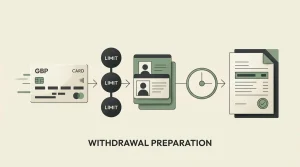
BetNjet withdrawals UK: minimum, limits and verification risk
BetNjet UK Guide Payout rulesBetNjet's current general terms set a £50 minimum withdrawal and standard...

Anonymous Crypto Casinos in the UK: What to Know
A look at no-KYC registration, UK licensing, crypto transactions and the verification risks that can...

Instant withdrawal casinos in the UK: how payouts work
Withdrawal speed depends on more than the casino: payment routes, processing steps, bonus conditions and...

BNB Casino Comparison in the UK: Payments and Licensing
A crypto payment method does not place a gambling service outside Britain’s licensing framework. BNB...
Bitcoin Cash Casinos in the UK: Licensing and Access
BCH can be accepted by offshore casinos, but payment availability does not establish that a...

Cardano ADA Casino Comparison: UK Licensing Explained
The comparison distinguishes advertised Cardano access from UK authorisation and highlights what the available evidence...

Casino Not on GamStop: Instant Withdrawal Explained
Withdrawal timing depends on the steps between a casino request and payment, as well as...

Credit Cards at UK Casino Sites: What’s Allowed
UK-licensed casinos cannot accept credit-card deposits for gambling, so the card type and route used...

UK Casino Sites That Accept Debit Cards
The guide explains how card funding differs from credit, and why a payment-card logo alone...

EcoPayz Casino Sites in the UK: Payment Guide
EcoPayz may appear as Payz, and availability can vary by casino, account and transaction. EcoPayz,...

Casino Sites That Accept Jeton in the UK
Jeton availability varies by operator, so payment access should be checked separately from a casino’s...

UK Skrill Casino Sites: Deposits and Withdrawals
Skrill availability, bonus conditions and withdrawal routes can differ between casinos, so the cashier’s current...

Casinos That Accept Apple Pay UK: What Boku Means
Boku deposits use mobile billing or prepaid credit, but that route does not confirm Apple...

Casinos That Accept AstroPay in the UK: What to Check
A casino’s games lobby does not confirm that AstroPay is available for an account or...

Bank Cheque Casinos in the UK: How Boku Differs
A bank cheque draws on a bank account, while Boku places a gambling payment on...

Casinos that accept bank transfers in the UK
Cashier listings can group payment choices together, but Boku uses mobile-network billing rather than a...

Casinos That Accept Bitcoin in the UK: Payment Routes
Payment labels do not confirm availability for UK customers or whether a route supports deposits,...

Casinos That Accept Boku in the UK: What to Know
Boku availability varies by cashier, and mobile-network billing has deposit limits and cannot be used...

Casinos That Accept CashToCode in the UK
CashToCode availability, slot-promotion terms and withdrawal options are separate checks, so confirm each in the...

Casinos That Accept Citadel in the UK: How to Check
A casino’s cashier shows the payment routes offered for an account; broad labels such as...

Casinos That Accept Click2Pay in the UK: What to Check
Click2Pay availability, slot rules and promotion terms are separate checks, while cashier details determine how...

ClickandBuy at UK Casinos: What Can Be Confirmed
Availability can vary by account and transaction, and a deposit option does not necessarily provide...

Casinos That Accept Debit Cards in the UK
Learn how deposits, accepted cards, account currency and withdrawal processing shape the use of debit...

Diners Club at UK Casinos: Deposit Acceptance
Diners Club support is not guaranteed, and whether a card works depends on its product...

Casinos That Accept Dogecoin in the UK
A cryptocurrency reference is not proof that Dogecoin is available to UK customers or usable...

Casinos That Accept E-Checks in the UK: How to Check
E-check availability depends on the UK account’s live cashier, while payment labels, limits, fees and...
Casinos That Accept eCheques in the UK
An eCheque listing can vary by account and transaction, and does not establish that the...

Casinos That Accept Entropay in the UK: Payment Checks
A casino’s cashier must show Entropay as an available route; general card or payment lists...

Casinos That Accept Ethereum in the UK: What to Check
A casino’s games being available online does not mean Ethereum is available in its cashier...
Casinos That Accept E-Wallets in the UK
Understand how wallet deposits and withdrawals work, what to check in a casino cashier, and...

Casinos that accept Giropay in the UK: what to check
Giropay availability, bonus eligibility and withdrawal rules are separate questions, each answered by the cashier...
Casinos That Accept Google Pay in the UK
The cashier shows available deposit routes, while promotion terms and withdrawal conditions clarify what happens...

Casinos That Accept iDEAL in the UK: Payment Guide
How iDEAL availability, slot bonuses and withdrawal methods are treated as separate parts of an...

Casinos That Accept InstaDebit in the UK
InstaDebit availability does not confirm bonus eligibility, and a deposit and its withdrawal may follow...

Casinos That Accept Interac in the UK: What to Check
Interac availability, slot access and payment terms are separate questions, while UK slot rules and...

Casinos That Accept Klarna in the UK: What’s Confirmed
Klarna’s retail availability does not confirm a casino deposit route; the cashier’s listed methods determine...

Casinos That Accept Litecoin in the UK: Payment Guide
Litecoin changes how value reaches an account, not the UK rules that govern licensed online...

Casinos That Accept Maestro in the UK
Maestro acceptance, promotion terms, slot availability and withdrawals are separate questions, so each needs its...

Casinos That Accept Mastercard in the UK
A Mastercard can fund an account, but it does not define the games, bonus terms...

Casinos That Accept MiFinity in the UK
Availability can differ by account, and a listed payment method does not confirm that deposits...

Casinos that accept Monzo UK: payment options
A casino’s game catalogue and its cashier are separate; pay-by-phone availability, bonus eligibility and withdrawal...

Casinos That Accept MuchBetter in the UK
MuchBetter availability, bonus eligibility and withdrawal handling are separate checks, with other payment routes to...

Casinos That Accept Neosurf in the UK
A practical look at payment availability, account ownership, withdrawal routes and the controls that shape...

Casinos That Accept Neteller in the UK: Payments
Neteller availability at the cashier is only one part of the choice; account ownership and...

UK Casinos That Accept Boku and Pay by Phone
Boku routes a casino deposit through a mobile account, while limits, bonus terms and withdrawal...

Casinos That Accept PayPal UK: Boku Explained
Boku uses mobile billing or phone credit, so its deposit process and restrictions should not...

POLi at UK Online Casinos: What to Check
Slot availability, cashier listings and transaction terms answer different questions, so each needs checking separately....

Casinos That Accept Revolut in the UK: How to Check
Casino payment listings can vary by account, and card-network labels alone do not confirm Revolut...

Casinos That Accept XRP in the UK: Payment Checks
A slot catalogue and a cashier answer different questions, so XRP deposits and withdrawals need...

UK Casinos That Accept Siru Mobile Payments
Pay-by-mobile deposits charge a phone bill or PAYG balance, while operator rules, limits, bonuses and...

Casinos That Accept Solana in the UK: What’s Verified
A payment method is confirmed only when a current route is tied to a specific...

Casinos That Accept Tether in the UK
Tether availability can depend on the casino’s cashier, transfer network, fees, account currency and verification...

Casinos That Accept Ukash in the UK: Payment Guide
Ukash-style vouchers may not appear in the cashier, and alternatives can differ in availability, promotions...

Casinos That Accept UPaycard in the UK: Payment Guide
A casino’s cashier listing, bonus terms and withdrawal rules can treat the same payment method...

Casinos That Accept USDC in the UK: What to Check
USDC references do not confirm bonus eligibility or explain how deposits, withdrawals and conversion work...

Casinos That Accept Visa in the UK: How Payments Work
Visa availability can vary by cashier, while bonus eligibility, withdrawal routes, fees and timing follow...

WebMoney at UK Casinos: How Boku Differs
Boku deposits are charged to a mobile bill or prepaid phone credit, while WebMoney must...

Casinos That Accept Wire Transfers in the UK
Bank-transfer labels can cover different payment arrangements, with availability and processing shaped by the cashier...

Casinos That Accept Wirecard in the UK: What to Check
A Wirecard listing relates to deposits, not slot games, and payment availability and promotion terms...

Casinos That Accept Zimpler in the UK: Payment Guide
A practical guide to Zimpler availability, promotion terms, deposit conditions and how payment rules relate...

Fast Withdrawal Casinos in the UK: How Payouts Work
A clear look at withdrawal checks, payment routes and the steps between requesting a payout...

Instant bank transfer casinos in the UK: how payments work
Bank transfers move funds directly between accounts, but the route, casino terms and payment timing...

iPad Casinos in the UK: Payments and Play
An iPad uses the casino’s ordinary cashier, where available payment options and the route for...

Mobile Top-Up Casino UK: How Phone Deposits Work
Phone-funded deposits use a specific payment route, with different charges, bonus conditions and withdrawal limits...

Online Casinos That Accept SMS Deposits: How It Works
A Boku deposit is confirmed by SMS and charged through a mobile account, with the...

Pay by Mobile Casinos UK: Deposits and Bonuses
How phone-based deposits work, where to check acceptance, and why they may not qualify for...

Pay by phone bill at UK casinos: how deposits work
Payforit can fund a casino account through a mobile bill or prepaid credit, but it...

Pay by Phone Casinos UK: How Deposits Work
Payforit links a casino deposit to a mobile account, with the charge handled through a...

Payforit Mobile Casinos UK: How Deposits Work
Payforit is a mobile payment route offered by some operators, not a separate kind of...

Quick Withdrawal Casinos in the UK: How Payouts Work
Withdrawal timing depends on more than approval, with payment routes, verification and bonus conditions all...

Same-Day Payout Casinos in the UK: How They Work
A withdrawal moves through casino processing and a payment route, so a same-day arrival is...

Casinos That Accept Direct Banking: UK Payment Guide
See how Open Banking deposits work, why withdrawals may take longer, and what to check...

TRON (TRX) Casino Comparison for UK Players
UK licensing obligations apply to remote gambling offered in Great Britain, while TRX payment, bonus...





























































































































































































































































